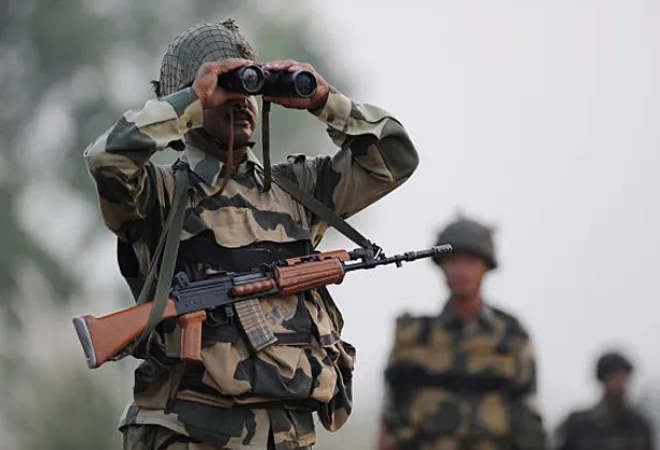
 A BSF solder keeping watch over the other side of the international border with Pakistan, somewhere in the western section. (File photo for representation)
Let me be direct about something that tends to get buried under bureaucratic language and inter-service politeness: the friction between cadre officers of the central armed police forces (CAPFs) and those of the Indian Police Service (IPS) is not simply a squabble over rank and postings. It is something considerably more serious – and considerably more consequential for India’s internal security.
Call it what it is: a structural fault line running through the heart of the country’s frontline security architecture. And like most fault lines, it draws little attention until the pressure becomes impossible to ignore.
Nearly six years ago, I wrote my first op-ed for India Sentinels, titled “IPS Officers vs CAPF Officers: Unseemly Tug of War.” In it, I argued that the IPS lobby’s resistance to implementing court orders on organized service status for CAPF officers was driven not by any genuine concern for national security, but by the desire to protect their own promotional avenues within these forces.
I pointed out that the constitutional argument for IPS deputation in CAPFs rested on a false premise – that no provision in the Constitution confers on IPS officers a right to deputation in these forces – and that continued reservation of senior posts for deputed officers was not only structurally indefensible but impinged on the fundamental rights of CAPF cadre officers to be considered for those positions. I also noted that the historical justification for deputation – that the original CAPF cadres were young and inexperienced – had long since expired.
The cadres had matured. Domain specialists with decades of operational experience were available in abundance. Deputation, I argued, had become redundant.
Six years on, I find myself writing about the same problem. The language has grown more measured, the legal record longer and the stakes higher – but the essential failure of institutional will remains. If anything, the situation has worsened.
Read also: Operation Sindoor’s success cannot mask Pahalgam’s security failures
These Are Not Your Average Police Forces
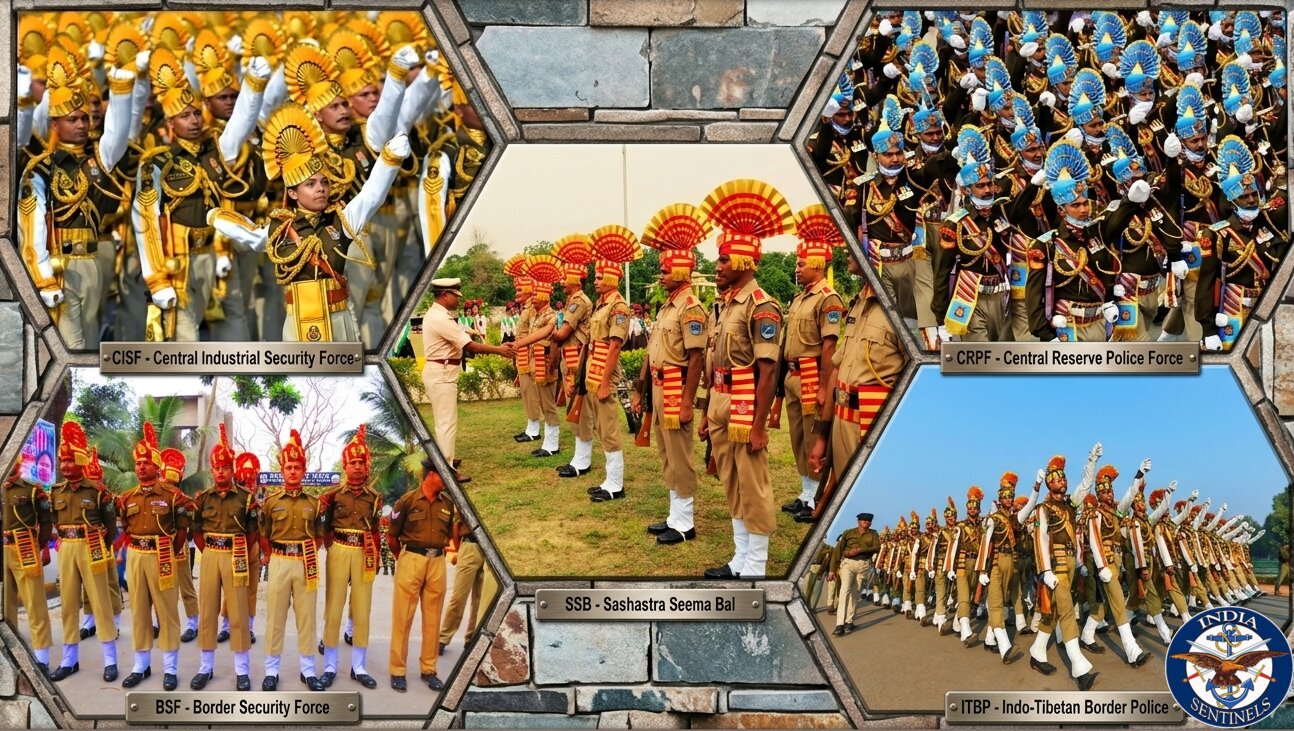
I spent decades in the Border Security Force, and one thing I can say with certainty is that the CAPFs are nothing like conventional police organizations. The BSF, the CRPF, the ITBP, the SSB, the CISF – these forces guard some of the harshest terrain on earth, fight insurgencies in conditions most people cannot imagine, and manage internal security crises that would overwhelm a standard law-and-order apparatus.
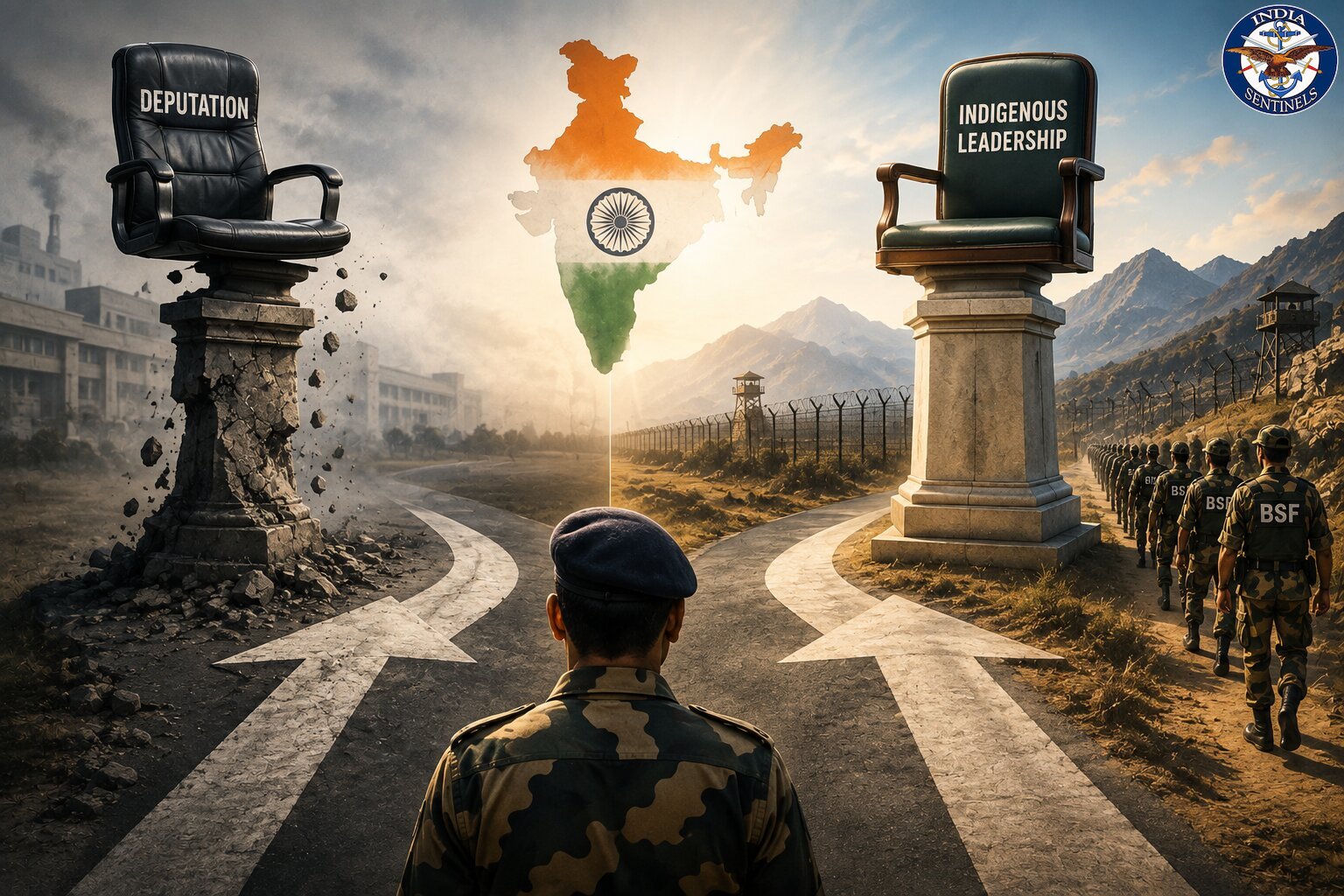
That kind of work demands a very particular kind of leadership – one grown from within, not parachuted in from outside. An officer who has spent years along the Bangladesh border in Bengal’s summer heat, or winters at an ITBP post above 15,000 feet in Ladakh, or counterinsurgency operations deep in the Dandakaranya forests of Chhattisgarh, carries a knowledge that simply cannot be acquired in two years on deputation. He knows the terrain, the troop temperament, the rhythms of deployment and recovery.
These are not soft variables. They shape whether an operation succeeds or fails.
A deputed officer, however talented and well-intentioned, arrives with a timer ticking. His understanding of the force is necessarily partial, his institutional memory borrowed rather than built. The result, too often, is decisions made at a remove from field reality – extended deployments without adequate rotation, manpower directives that look clean on paper but are impossible to execute on the ground, units pulled away from their specialized roles for tasks they were never designed to perform.
Read also: Border Security Force is an armed force, not police, nation must know
The Court Saw What Policy Chose to Ignore
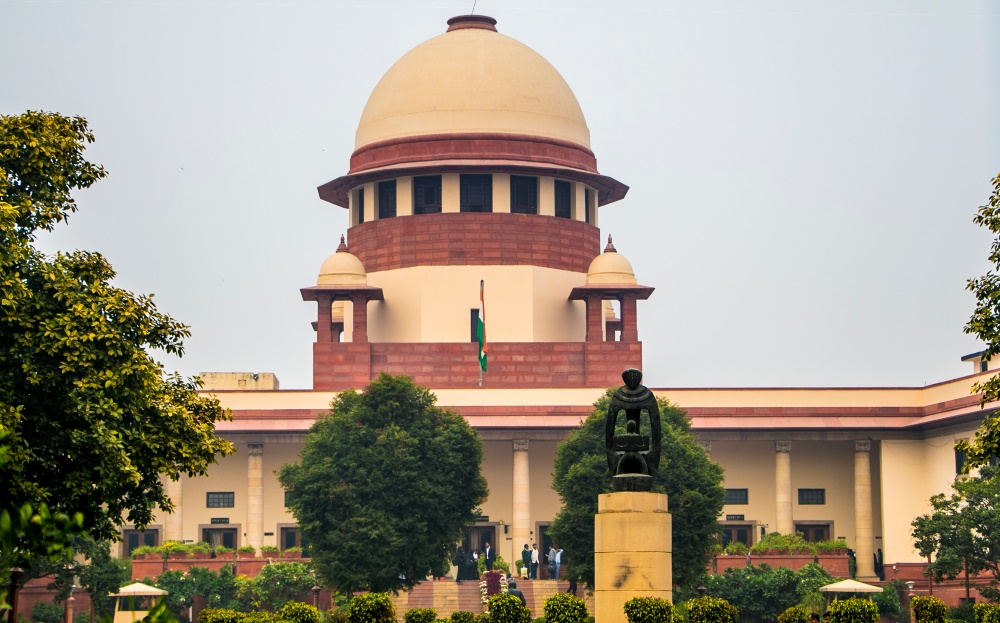
To its credit, the Supreme Court recognized this imbalance and did something about it. In its judgment in Sanjay Prakash vs Union of India [archived link], the court recognized CAPF Group A officers as members of an organized service and directed a calibrated reduction in IPS deputation up to the rank of inspector general. This was not a hasty ruling. It came after a careful examination of arguments touching on coordination, intelligence integration and administrative efficiency.
It is worth being clear about what the court did – and did not – say. It did not declare IPS officers unfit for CAPF roles. It called for proportionality and structural correction. There is a difference, and losing sight of it turns a measured judicial intervention into fuel for an unnecessary conflict.
What concerns me, though, is what has happened since. The proposed Central Armed Police Forces General Administration Bill, 2026, appears to be heading in precisely the opposite direction – towards institutionalizing the existing arrangement rather than reforming it. If that is indeed the trajectory, the bill will not just sidestep the court’s direction; it will bake into law the very structural problem the court identified. That would be a serious mistake.
Read also: Kashmir Book Ban – Why censorship can’t cure valley’s complex reality
Something Quietly Breaks Inside the Ranks
There is a consequence of this system that rarely makes it into policy discussions, but that anyone who has served in these forces will recognize immediately: the slow erosion of confidence in the chain of command.
Picture a unit-level commander who receives a directive from above that he simply cannot execute – not because he is unwilling, but because the manpower is not there, the logistics will not support it, or the operational reality on the ground makes it impossible. He is the one who appears non-compliant. The senior leadership, insulated from that ground reality, continues to appear visionary and well-intentioned. The credibility gap this creates is quiet, persistent, and damaging.
Regimentation – the disciplined, hierarchical cohesion that makes these forces effective – depends on trust running in both directions through the chain of command. When that trust frays, you do not necessarily see a dramatic collapse. What you see instead is a gradual hollowing out: men who do their duty but have stopped believing in the system around them.
Administrative interventions like frequent inter-unit transfers, justified in the name of efficiency or anti-corruption, can accelerate this process. The bonds between a commander and his men, built through shared postings and shared hardship, are not a sentimental luxury. They are an operational asset. Break them carelessly, and you may end up with a force that is structurally intact but operationally diminished.
Read also: Akhand Bharat and ‘retaking’ Pakistan-occupied Kashmir
Numbers Do Not Lie
The CAPFs today are operating under a level of sustained pressure that I would describe, without exaggeration, as a quietly worsening crisis.
Beyond their primary mandates, these forces are routinely called upon for election duties across the country’s vast and often logistically punishing geography, for internal security contingencies ranging from communal disturbances to anti-Naxalite operations, and for large-scale public order management that can last weeks at a stretch. Each such deployment pulls men away from the duties they were trained and posted for.
There have been well-documented instances where a significant portion of a battalion’s deployed strength has been diverted from border guarding to election-related assignments. The arithmetic is not complicated: fewer men on the line means expanded areas of responsibility for those who remain, longer duty cycles with less recovery time, and a cumulative toll – physical and psychological – that does not appear in official deployment charts but is very real in the barracks.
India’s CAPF personnel strength stands at roughly 10 lakh across seven forces, making them among the largest paramilitary organizations in the world. And yet sanctioned vacancies in several forces remain stubbornly unfilled, with vacancy rates in some units exceeding 10 per cent. The gap between mandated strength and boots actually on the ground makes every deployment decision a calculated gamble. The data on voluntary retirements and stress-related medical incidents tells a story that deserves far more attention than it receives.
Read also: Efficiency of CAPFs suffering from ‘glass ceiling’ effect
Deputation Was Meant to Help, Not to Dominate
I want to be fair here. The deputation of IPS officers into CAPF leadership was not designed in bad faith. Its original purpose was to facilitate administrative coordination, provide inter-service linkage, and ensure that these forces benefited from the broader governance experience that IPS officers bring from their state police and central postings. That rationale retains some validity.
The problem is not deputation as a concept. The problem is what it has become: a dominant structural feature of CAPF leadership rather than a supporting one. And at that scale, its limitations become unavoidable.
Leadership roles in operational forces require continuity, domain familiarity and a form of long-term accountability that rotating tenures make difficult to sustain. A director general who arrives on a two-year posting and moves on before the downstream consequences of his major decisions become visible is not easily held accountable for those decisions. That is not a personal failing; it is a structural one.
The coordination argument also needs scrutiny. In practice, the kind of coordination that matters – with state administrations, district authorities, local intelligence networks – is built through sustained presence, not service identity. A BSF officer who has spent three postings along the same stretch of the Rajasthan or Bengal border will almost certainly be a more effective interlocutor with the local administration than an IPS officer arriving fresh on a limited-tenure assignment. Familiarity, in this business, is not a luxury. It is a force multiplier.
Read also: Story of BSF’s key role, valour and sacrifices in 1971 India-Pakistan war
It Is Also a Matter of Basic Fairness
Let me say something plainly that tends to get obscured in the policy language around this issue: there is a straightforward question of professional equity here, and it deserves to be acknowledged.
CAPF cadre officers spend their careers in conditions of genuine hardship and genuine danger. They lead troops through the winters of Sikkim and Ladakh, through the jungles of Bastar, along the fences of the Rann of Kutch and the riverine borders of Bengal and Assam. Their professional identities are shaped entirely by these experiences. Many of them never know a comfortable posting.
And yet access to the highest leadership positions within their own organizations – the very organizations they have served for decades – remains structurally constrained. The unspoken message this sends is that these officers are fit to command in the field but not to lead the institution. No organization can sustain that message indefinitely without paying a price in morale, retention and the quality of those it attracts.
The Supreme Court’s judgment was, among other things, a recognition of this inequity. It sought a calibrated correction – not the exclusion of IPS officers, but a restoration of proportionality. Any policy response that dilutes this principle is not a neutral administrative choice. It is a choice to perpetuate the problem.
Read also: Kargil War – Unrecognized contribution of BSF
The Bigger Picture
Ultimately, this debate has to be lifted out of the language of service rivalry and seen for what it really is: a question about how India structures the leadership of forces that are central to its internal security.
The CAPFs are not peripheral. They are the forces that hold the line in the country’s most difficult corners – its insurgency zones, its contested borders, its communally sensitive districts. Their effectiveness depends on clarity of command, coherence in policy, and a genuine sense of institutional purpose within the ranks. A leadership model misaligned with the operational character of these forces does not produce dramatic failures. It produces quiet, cumulative degradation – the kind that is easy to ignore until it is not.
There is also a structural peculiarity worth naming. Unlike the Army, the Navy or the Air Force, the CAPFs do not have the same formalized interface with the political executive. There is no equivalent of a service chief with a direct, institutionalized channel to the government. This makes internal leadership all the more vital: if those at the top of these organizations do not have deep roots in them, the operational voice of the forces is muffled at the very moment it most needs to be heard.
Read also: Modernization and reforming our border-guarding forces
What Needs to Happen – and Why It Matters
A balanced approach is possible, and it is not complicated to articulate.
The spirit of the Supreme Court’s judgment must be implemented – genuinely, not performatively. That means creating a clear, merit-based leadership pathway for CAPF cadre officers up to the highest ranks of their organizations, and rationalizing IPS deputation at senior levels to roles where it adds genuine value.
Where deputation is retained, it should be role-specific, tenure-limited, and governed by accountability frameworks that go beyond administration and compliance to include measurable contributions to operational readiness and institutional development.
And the channels through which field-level realities reach policymakers need to be widened and protected. At present, those channels are too narrow, too slow and too easily filtered. Operational commanders must have structured, credible ways to communicate ground conditions upward – not because policymakers are indifferent, but because the system as currently designed makes it too easy for inconvenient truths to get lost in transit.
Read also: Placing border-guarding forces under the Army?
The Forests, the Borders, the Barracks
This is not, in the end, a story about two services competing for precedence. It is a story about what happens when the structure of leadership is mismatched with the nature of the work.
Get that alignment right, and the forces will be stronger, their personnel more motivated, their institutional culture more resilient. Get it wrong, and the consequences will not stay within institutional boundaries. They will be felt in the forests of Chhattisgarh, along the salty distributaries of the Sundarbans, in the high passes of the Karakoram, and in the lives of the men and women who serve there.
In matters of internal security, structural clarity is not a policy preference. It is the ground on which everything else stands – or falls.
Disclaimer: The views expressed in the article are the author’s own and don’t necessarily reflect the views of India Sentinels.
Follow us on social media for quick updates, new photos, videos, and more.
X: https://x.com/indiasentinels
Facebook: https://facebook.com/indiasentinels
Instagram: https://instagram.com/indiasentinels
YouTube: https://youtube.com/indiasentinels
© India Sentinels 2026-27