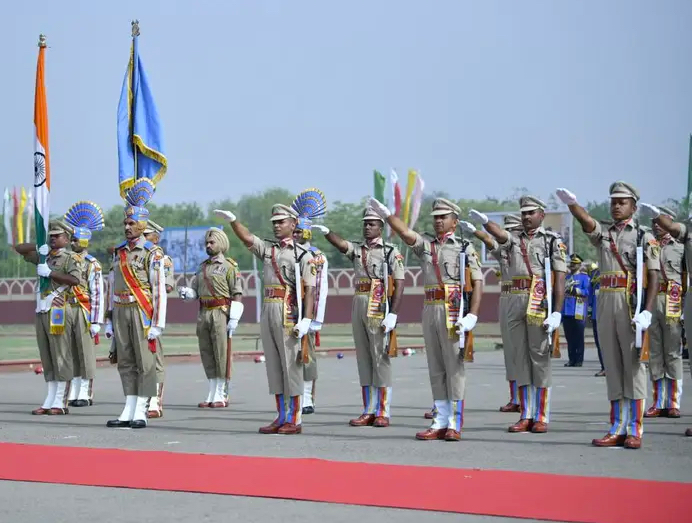
 Fresh officers during a pass-out ceremony at the CRPF Academy at Kedarpur, Gurugram, Haryana. (File photo for representation.)
When Parliament passed the Central Armed Police Forces (General Administration) Bill, 2026, it did more than legislate – it chose institutional convenience over institutional integrity. The law, now enacted after receiving presidential assent on April 9, 2026, represents a missed opportunity of historic proportions to fix structural deformities that have long hollowed out India’s paramilitary forces from within.
The sequence of events leading to this law deserves close examination. On May 23, 2025, the Supreme Court delivered a landmark judgment in Sanjay Prakash & Others vs Union of India, directing the government to progressively reduce the deputation of Indian Police Service (IPS) officers to senior posts in the central armed police forces (CAPFs) – specifically at the deputy inspector general and inspector general levels – within two years. The ruling recognized CAPFs as organized Group A services (OGAS) entitled to all attendant benefits and career protections, and it marked the first time the constitutional rights of organic CAPF cadre officers had been so unambiguously affirmed by the apex court.
The government’s response was swift and, to many, deeply disconcerting. Within months, it introduced the CAPFs (General Administration) Bill, 2026, in the Rajya Sabha on March 25 and in the Lok Sabha on March 31. Rather than giving effect to the spirit of the Supreme Court’s direction, the bill effectively legislated around it – cementing IPS deputation at senior levels by mandating that 50 per cent of all inspector general posts, a minimum of 67 per cent of additional director general posts, and all posts of special director general and director general be filled exclusively by IPS officers on deputation.
Read also: Are elections compromising our border and national security?
A Parliament That Did Not Listen
The opposition raised substantive objections. Members across party lines urged the government to respect the experience, professionalism, dignity, and sacrifices of organic CAPF officers who form the operational backbone of these forces. They moved amendments, including a plea to refer the bill to a parliamentary select committee for wider deliberation. Every amendment was rejected. Every plea was dismissed.
The government’s reply in both Houses was strikingly brief and generalised – a sweeping assertion that the bill would strengthen internal security, with no meaningful engagement on the critical concerns raised: officer stagnation, force morale, deteriorating combat potential, the erosion of institutional knowledge at the command level, and the existential contradiction of allowing officers with no CAPF experience to lead forces that guard India’s most sensitive borders.
Conspicuous in his absence during the parliamentary debate in both Houses was the Union home minister, Amit Shah. For veterans and serving officers watching the proceedings, his absence spoke volumes. The stakeholder community – comprising veterans who have served from the rank of constable to additional director general, men who understand the operational DNA of these forces better than any outsider – was contemptuously sidelined despite repeated requests for consultation.
The bill was passed by voice vote. The president gave her assent on April 9. It is now the law of the land.
Read also: Debunking the myth of IPS superiority over CAPF cadres
The Real Debate: Not IPS vs CAPFs
The public discourse has been frequently, and unfairly, reduced to a tribal conflict between the IPS and the CAPF cadre. That framing misses the point entirely.
This is, at its core, a debate about transparency, fairness, and justice – about whether India’s national security apparatus is structured rationally or whether it perpetuates an institutional hierarchy that rewards pedigree over experience. The injustice is stark: an IPS officer with 13 or 14 years of service, having spent not a single day in CAPF operations, can be inducted as deputy inspector general, while an organic CAPF officer with 14 years of hard-won professional experience – in counter-insurgency operations, border management, and force discipline – stagnates at the introductory rank of assistant commandant.
This is not a matter of opinion but a structural anomaly – an institutional absurdity that would be immediately apparent to any dispassionate observer. The Supreme Court judgment was a historic constitutional corrective. The government chose to legislate it away.
Read also: Commanded into Crisis – Systematic wrecking of CAPFs’ moral fabric
The Four Structural Deformities
Even as legal challenges to the new law are likely to be mounted in courts – a battle that promises to be protracted – it is imperative that the broader structural deformities afflicting the CAPFs be placed front and centre in the national security conversation. There are four deformities in particular that deserve urgent attention.
The first deformity: Leadership selection at the top. Prakash Singh, a former director general of the Border Security Force and a member of the prime minister’s National Security Advisory Board, has publicly argued that all is not well with the CAPFs and that the government has neglected vital aspects of their functioning to the detriment of discipline, morale, and combat potential. In his article, “Don’t Neglect the Central Armed Police Forces,” he called for framing clear guidelines for posting officers as director general – including a minimum of two years’ prior service as DIG or IG in a CAPF or in command of an armed police formation in a state.
His prescription is reasonable as far as it goes, but it barely scratches the surface of the problem. Two years of qualifying experience cannot substitute for 30 years of professional immersion. The rot runs deeper than selection criteria – it lies in a structural design that positions the IPS as the default command class for forces it does not understand.
Read also: Chanakya’s Warning and India’s Shame – How the state fails its CAPFs
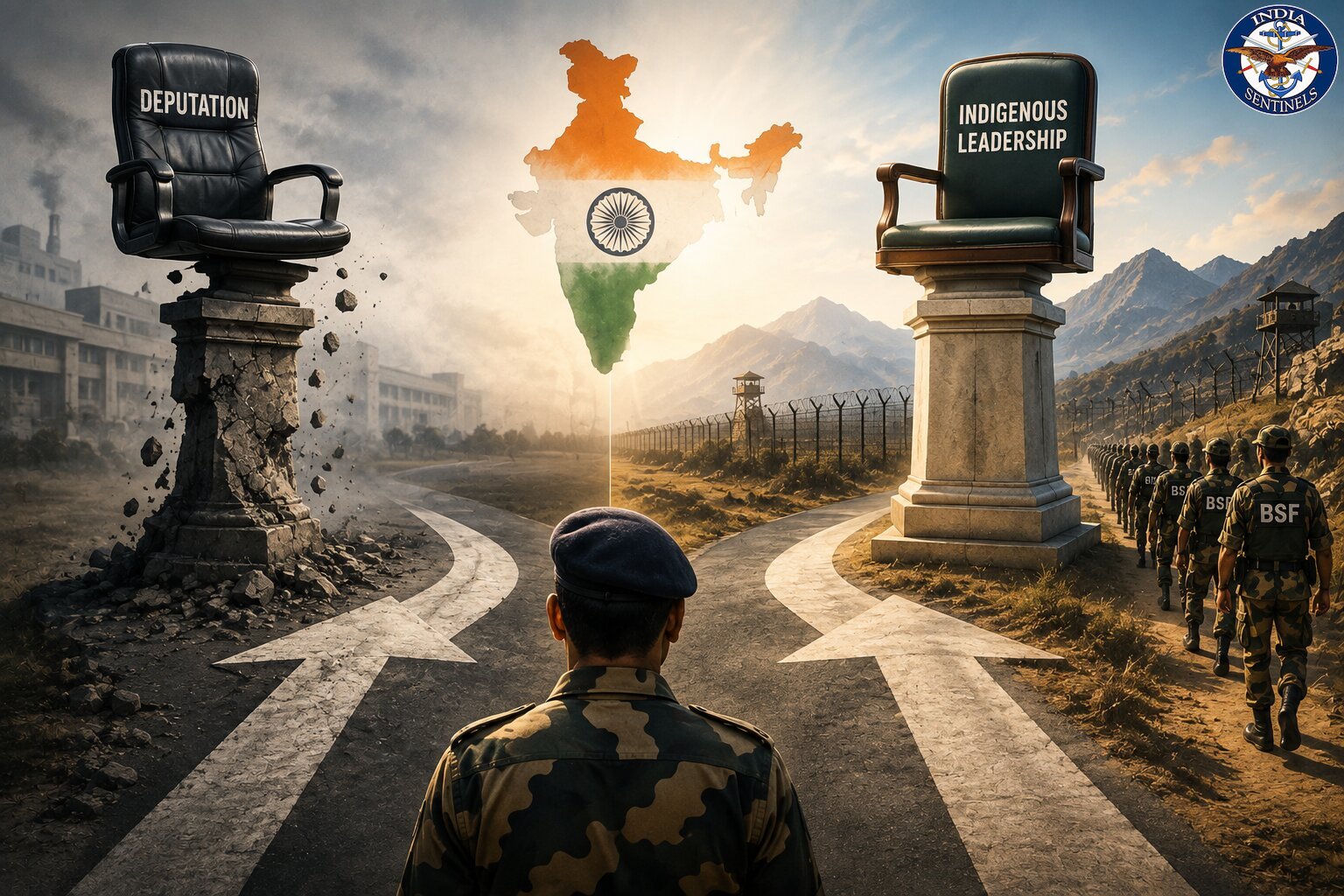
The historical record offers instructive precedents. Assam Rifles, one of India’s oldest paramilitary forces (originally raised as the Cachar Levy and given its current name in 1917), was provided with a purely Army cadre after independence in recognition of the fact that combat and national security imperatives demanded a different kind of command. The Indian Coast Guard offers an even more compelling parallel. Established on February 1, 1977, on the recommendations of a committee chaired by KF Rustamji, a former director general of the BSF, the Coast Guard was initially officered by naval personnel since its organic cadre required time to mature.
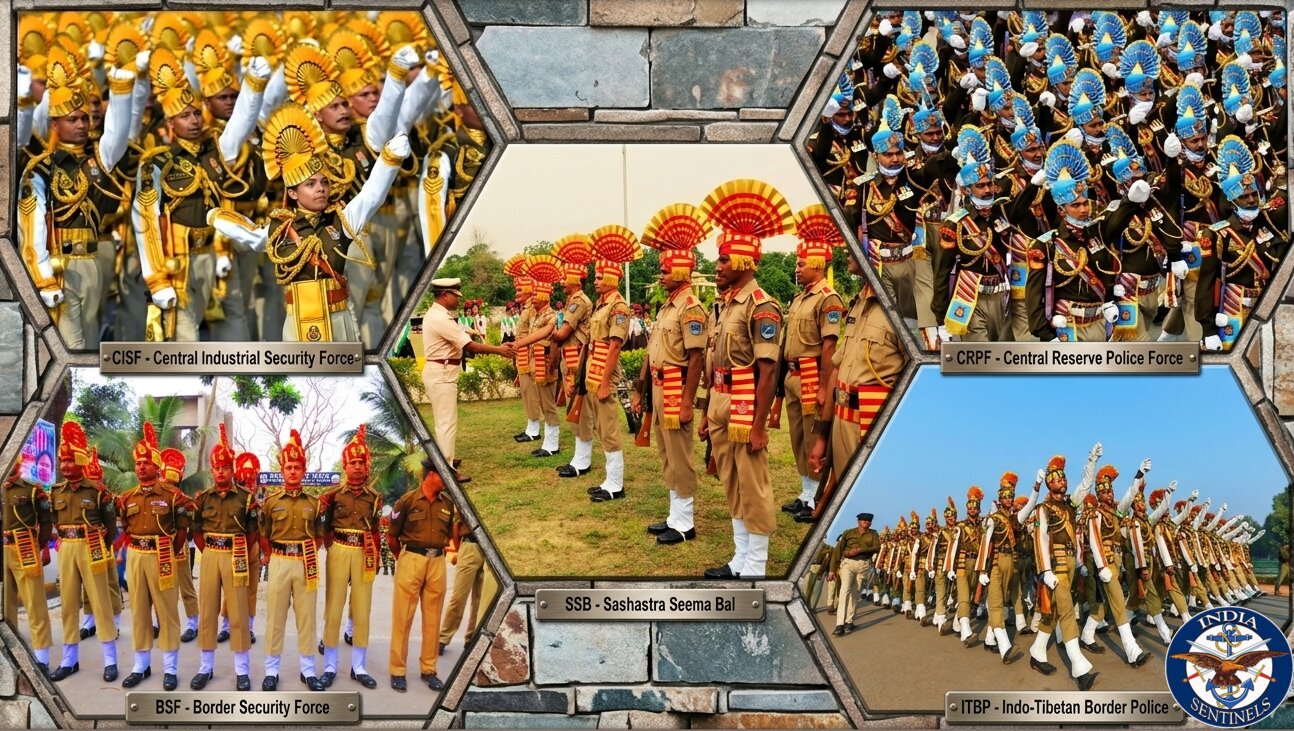
Over 38 years, its own cadre grew into command responsibility, and in 2016, Rajendra Singh became the first indigenous cadre officer to serve as director general of the Coast Guard. If a force established in 1977 could achieve complete cadre command within four decades without any adverse effect on national security, what possible justification exists for denying the same to the CAPFs – whose combined institutional age exceeds 259 years? The CRPF was raised in 1939, the ITBP in 1962, the BSF in 1965, the SSB in 1963, and the CISF in 1969.
Interestingly, the Supreme Court judgment concerning OGAS was implemented for the Railway Protection Force cadre officers by the Ministry of Railways, the cadre-controlling authority for RPF cadre officers now called as Indian Railways Protection Service, whereas denied to CAPF cadre officers by MHA, the cadre-controlling authority for IPS and CAPF cadre officers. Irony is that the benefit of one judgment was denied to CAPF cadre officers and given to RPF officers by the cabinet. Two ministries, same government, one judgment and two different implementation norms.
Read also: When Leadership Lacks Grounding – The real risk in the CAPF-IPS debate
The second deformity: Stagnation. Stagnation in the officer cadre is not an incidental problem – it is the direct and predictable consequence of the IPS deputation model, compounded by the non-grant of OGAS status and the non-functional financial upgradation (NFFU) for officers, alongside incessant, ad hoc tinkering with rank structures. Periodic interventions – ostensibly aimed at improving retention or achieving parity with state police and the personnel below officer rank (PBOR) – have consistently failed to address the root cause. Instead, they have created a top-heavy structure of aged rank-holders who struggle to cope with the physical and cognitive demands of a hostile security environment.
Combat potential has been diluted as a result.
The third deformity: Training standards and force cannibalization. India’s border-guarding battalions are being systematically hollowed out – not by the enemy but by their own deployment patterns. The Kargil Review Committee report warned, with prescient clarity, that repeated withdrawals of large numbers of troops from border-guarding duties for internal security and counter-insurgency operations has led to the neglect of borders. When battalions, companies, and even platoons are routinely cannibalised for duties far removed from their primary mandate, training – the bedrock of discipline and combat readiness – is the first casualty.
The ancient military axiom holds as true today as it ever did: the more one sweats in peace, the less one bleeds in war.
The fourth deformity: Grievance redressal and leadership indecisiveness. A force whose soldiers must routinely approach courts of law for basic redressal of service grievances is a force in distress. The number of court cases filed by CAPF personnel against their own administration is not merely a legal statistic – it is a barometer of institutional morale, and the readings are alarming. When the chain of command fails to resolve legitimate grievances, it forfeits the confidence of the rank and file. Decisive leadership is not a luxury in a paramilitary force; it is an operational necessity.
The growing resort to litigation is a symptom of a deeper malaise that the CAPF’s top leadership – and, by extension, the government – would do well to confront honestly.
Read also: BSF is an armed force, not police, nation must know
Independent Commission Only Answer
These deformities are not abstract concerns. They are felt, every day, by hundreds of thousands of men and women guarding India’s borders and maintaining its internal security. They degrade the operational ecosystem, suppress the satisfaction index, and, ultimately, diminish the combat potential of forces that the nation cannot afford to weaken.
The path forward is clear. The government must appoint an independent commission of security experts, headed by a sitting or retired Supreme Court judge, with a mandate to examine and address these structural deformities through wide consultation with all stakeholders – veterans, serving officers, operational commanders, and security analysts. The commission must be empowered, not merely advisory.
National security is not a domain where institutional failures can be allowed to fester in the interests of bureaucratic continuity or lobby politics. The stakes – measured in blood, in borders, and in the sovereignty of a nation – are too high, and too imponderable, to be subordinated to the inertia of the system.
Disclaimer: The views expressed in the article are the author’s own and don’t necessarily reflect the views of India Sentinels.
Follow us on social media for quick updates, new photos, videos, and more.
X: https://x.com/indiasentinels
Facebook: https://facebook.com/indiasentinels
Instagram: https://instagram.com/indiasentinels
YouTube: https://youtube.com/indiasentinels
© India Sentinels 2026-27