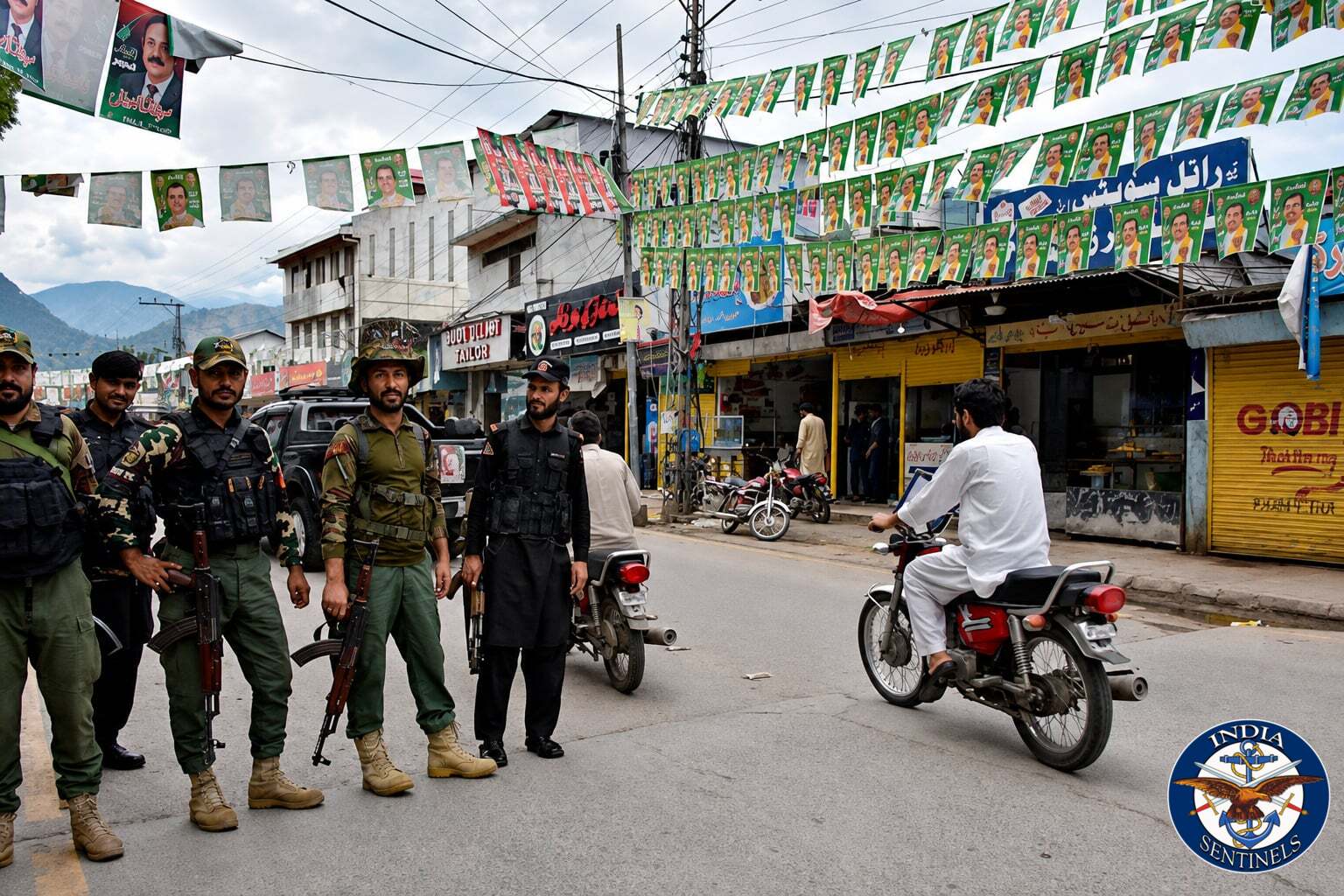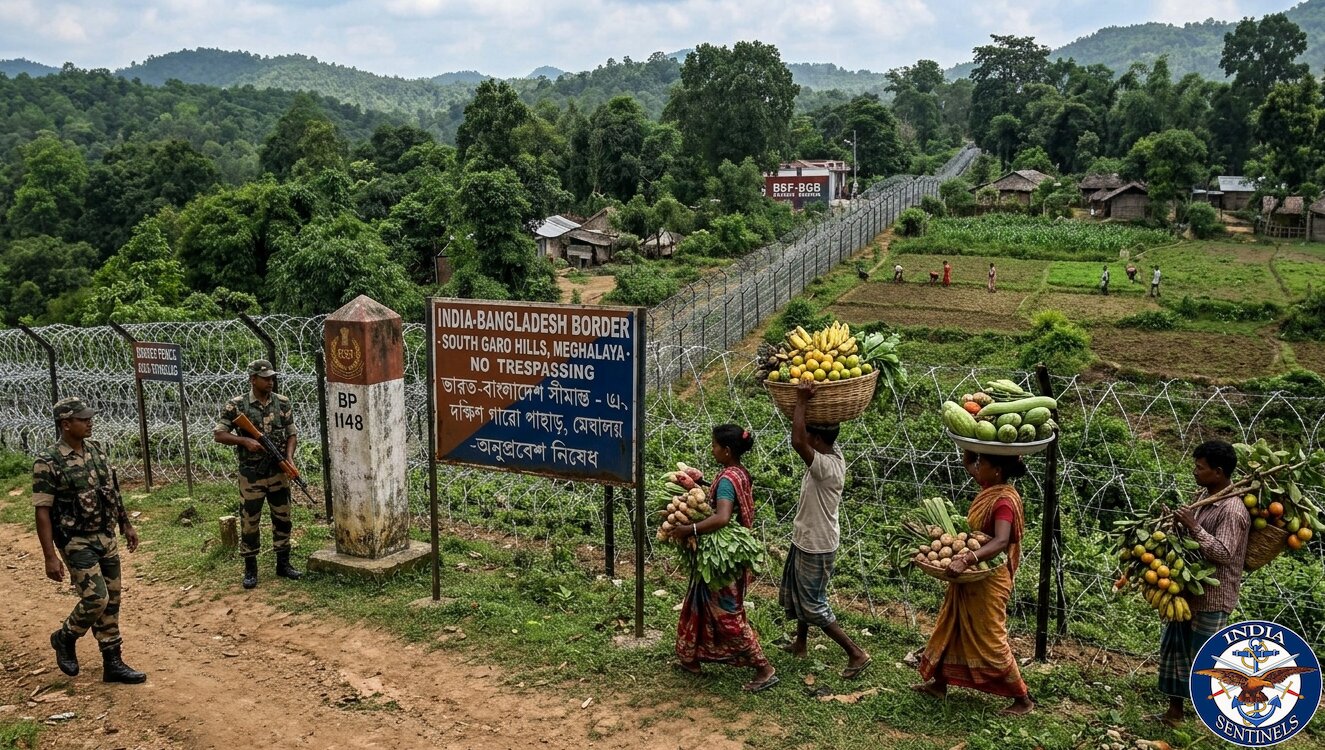
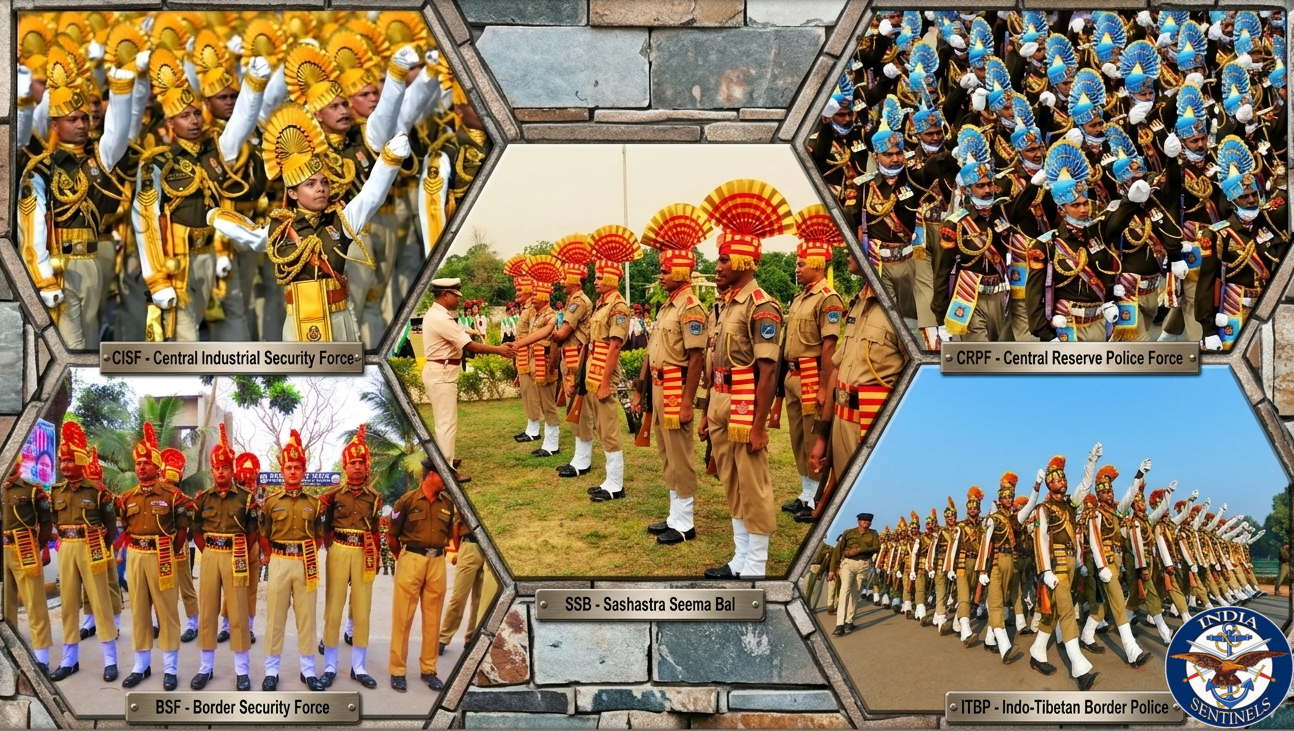
 Illustration for representation. (© India Sentinels 2026–27)
On April 9, the Central Armed Police Forces (General Administration) Act, 2026 – notified as Act No. 9 of 2026 – was published in the Gazette of India (Extraordinary) and came into force. The legislation was positioned as an overarching umbrella law to regulate the service conditions of “Group A” general-duty officers and other personnel of the CAPFs, harmonize judicial directions with administrative requirements, and preserve the operational distinctiveness of these forces.
On paper, it reads as a well-intentioned reform. In practice, however, it is a calculated subversion of a hard-won judicial verdict – one that had taken fourteen years of legal battle to arrive at.
The act begins on the right note. It reaffirms, unambiguously, that the central armed police forces are armed troops performing duties in the field under a strict command-and-control mechanism and a defined functional hierarchy. This is significant. For years, a section of the uninformed public – and, more worryingly, sections of the administrative establishment – has persisted in treating the CAPFs as glorified police organizations.
Read also: Trampling of Trust – The nightmare of a ‘deshbhakt’
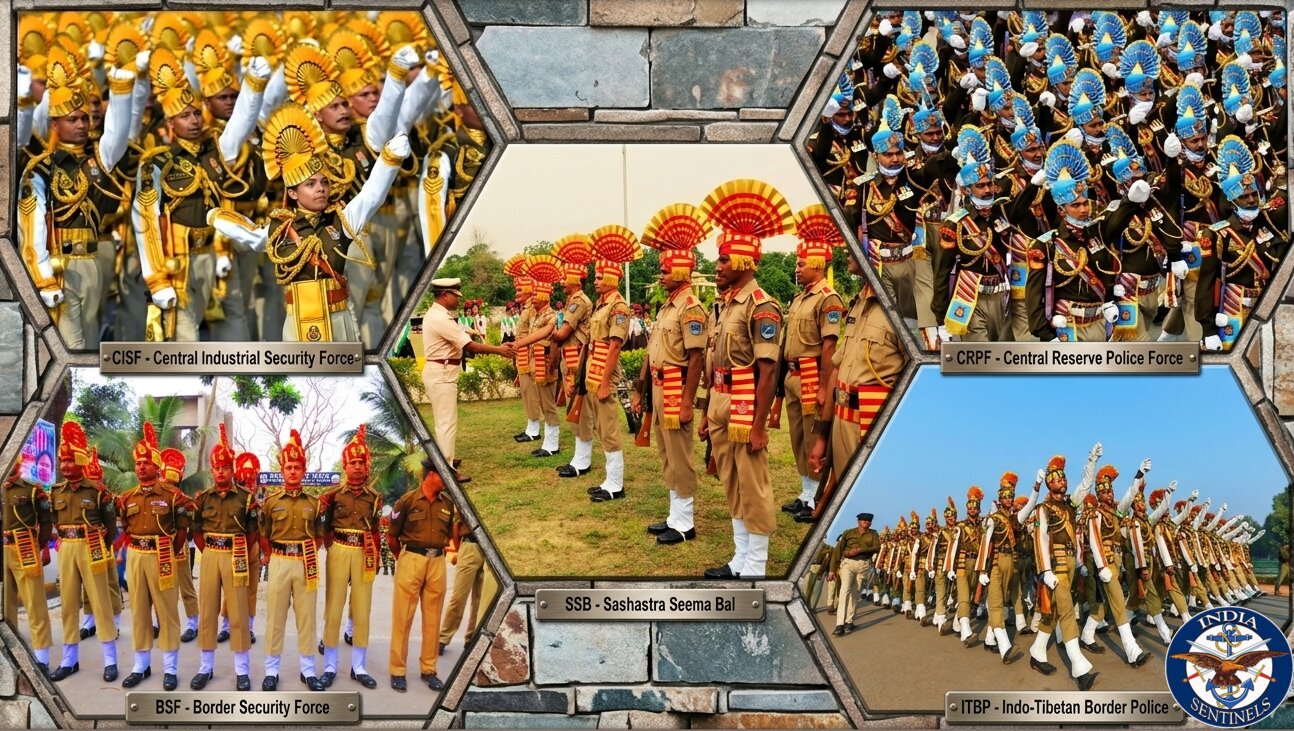
The act now settles that debate. These are armed forces. The BSF, CRPF, CISF, ITBP, and SSB are not constabularies but paramilitary formations operating in some of the harshest and most dangerous terrains on earth, from the frozen passes of Ladakh to the dense jungles of the northeast and the volatile coastline of Gujarat.
If the act truly honours this characterization, then a logical and urgent corollary follows: the nomenclature of these forces must change. The time has come to redesignate them. Forces guarding India’s land borders – the BSF, ITBP, and SSB – could collectively be called Union Border Security Forces (UBSFs). Those primarily engaged in internal security – the CRPF and CISF – could be brought under the banner of Union Internal Security Forces (UISFs). The Ministry of Home Affairs must shed its tunnel vision and make these changes. Names matter. They shape institutional identity, officer morale, and public perception. Forces that perform military-grade operations deserve military-grade recognition.
However, while the act is admirably clear-eyed about what CAPFs are, it is remarkably evasive about what they need. And this is where it goes badly astray.
Read also: Address the deformities in CAPF structure
The act explicitly acknowledges that the operational and functional requirements of the CAPFs are distinct from those of state police organizations and civilian bureaucratic set-ups. This is correct. A commandant leading a BSF battalion along the line of control (LoC) is not performing the same function as a superintendent of police managing a district. The former has grown through years of field postings, operational deployments, counterinsurgency campaigns, and border management. He understands the ethos of his force, the psychology of his men, and the logistical realities of remote deployment in ways that no outsider, however intelligent or well-intentioned, ever can.
The armed forces of India have long understood this principle. The Army, the Navy, and the Air Force nurture their leadership organically. Officers rise through the ranks, absorbing institutional culture, developing operational judgment, and earning the loyalty of their men through shared hardship. The CAPF cadre officers deserve the same trajectory. They endure the same professional hardships, the same long separations from family, the same physical and psychological demands of life on the frontier.
They grow with their organizations. They are its institutional memory.
Read also: Are elections compromising our border and national security?
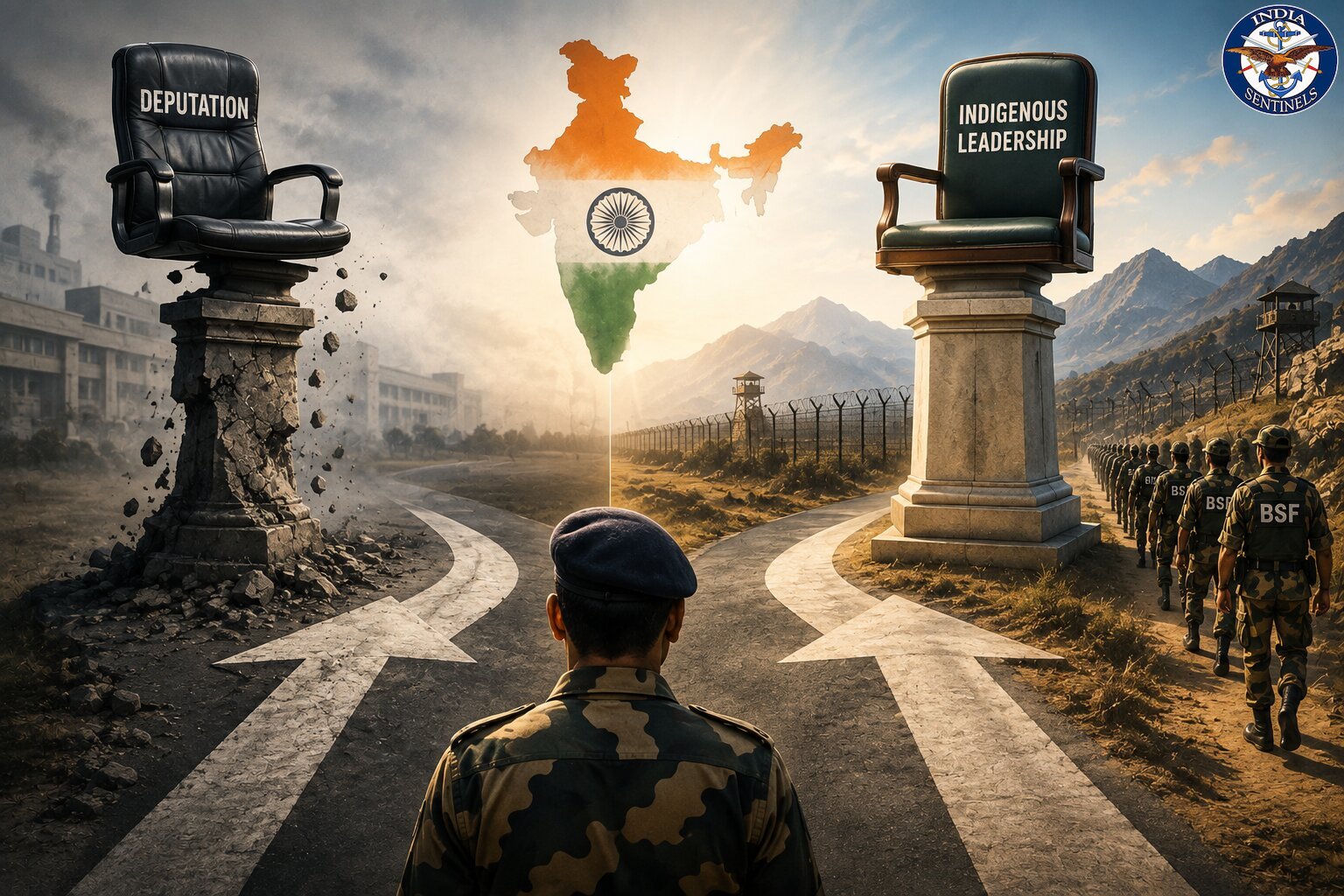
And yet, the act – while paying lip service to the distinct character of the CAPFs – does the opposite in practice. It continues to justify the induction of Indian Police Service (IPS) officers at the senior administrative grade (SAG) level in these forces. The IPS officer who arrives at a senior position in the BSF or CRPF is, by definition, a novice in the organization.
He does not know its operational ethos. He has not served in its battalions, led its patrols, or buried its men. His presence at the top dilutes command integrity, disrupts the promotional ladder for career CAPF officers, and – most critically – weakens the institutional coherence that is the backbone of any armed force’s combat effectiveness.
The government offers two justifications for retaining IPS officers at the SAG level. Both deserve scrutiny.
The first justification is the need for coordination between the CAPFs and state authorities. The argument goes that IPS officers, having served in state cadres, are uniquely placed to facilitate Centre-state coordination. This is, at best, a polite fiction. In practice, coordination between CAPF formations and state governments is carried out by CAPF cadre officers themselves – deputy inspector generals, commandants, and their equivalents. This writer has personally coordinated with multiple state forces and state authorities, including at the level of a chief minister, in matters directly bearing on national security. It is very much part of a CAPF officer’s professional domain.
Read also: Commanded into Crisis – Systematic wrecking of CAPFs’ moral fabric
The director generals and additional director generals – the topmost positions, which are currently occupied by IPS officers – may attend high-level meetings, but the substantive work of coordination, intelligence-sharing, joint operations planning, and logistics integration is done by the cadre. The act’s insistence on IPS presence for “coordination” is a myth being perpetuated to justify a patronage structure that serves the IPS lobby, not the national interest.
The second justification – that IPS presence in CAPFs is necessary for maintaining Centre-state relations – is even weaker. India’s constitutional framework addresses the division of powers between the union and the states through the Seventh Schedule under Article 246. National security falls squarely in List I of the Union List. Public order and police are state subjects under List II. When genuine tussles arise between the centre and states over jurisdictional matters, they are resolved not by IPS officers posted in paramilitary forces, but by constitutional courts.
The notion that an IPS officer at the helm of the BSF is somehow a guarantor of federalism is an argument that makes light of the Constitution itself.
Read also: Stagnant Ranks, Broken Morale – The cost of CAPF’s skewed HR policies
Both justifications, on honest analysis, are rationalizations – stretched arguments in search of a conclusion that has already been decided. The conclusion is the continued entrenchment of IPS influence over the CAPFs, regardless of what that costs in terms of operational effectiveness and officer morale.
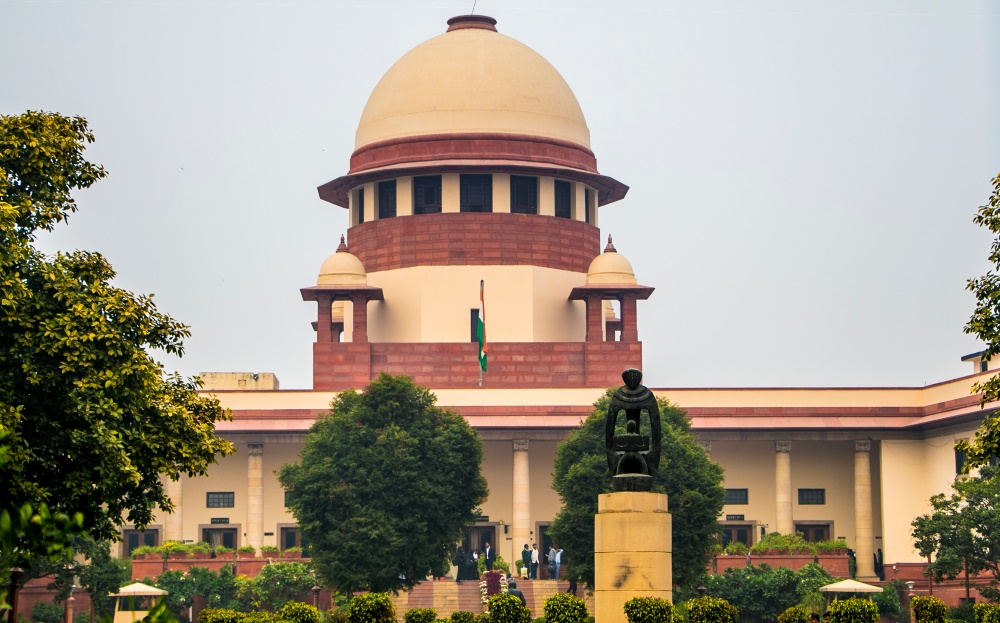
The most troubling aspect of the act, however, is its evident intent to nullify a judicial verdict that took fourteen years to obtain.
After extensive hearings in which all aspects of national security, service conditions, stagnation, and the distinct character of the CAPFs were examined, the courts – at multiple levels, including the Supreme Court – arrived at a reasoned judgment in favour of CAPF cadre officers. The honourable judges did not arrive at their conclusions lightly. They weighed the evidence, considered national security implications, and recognized the legitimate aspirations of officers who had spent their careers in service of the nation.
In paragraph 45, sub-paragraph 5 of the final order, the court directed that the number of posts earmarked for deputation in CAPF cadres up to the SAG level be progressively reduced over a period not exceeding two years. This was in addition to the grant of the organized “Group A” services (OGAS) and the non-functional financial upgradation (NFFU).
Read also: Chanakya’s Warning and India’s Shame – How the state fails its CAPFs
The CAPF (General Administration) Act 2026, by granting the executive sweeping powers to override judicial orders and directions through executive notifications – as provided in Section 3(a) of the act – effectively renders this judgment unenforceable. What the honourable Supreme Court granted to CAPF cadre officers as their rightful due has been taken away, not through an appeal or a constitutional amendment, but through legislative sleight of hand. The officers who have been most affected are the CAPF cadre officers themselves – and, in a larger sense, the authority of the Supreme Court.
The act’s passage was itself instructive. The government used its parliamentary majority to push the bill through, brushing aside an impassioned appeal from the opposition to either drop the bill or refer it to a parliamentary select committee for broader consultation. It ignored the pleas of CAPF veterans who sought direct dialogue to arrive at a mutually agreeable solution.
It disregarded the anxieties of veer naris – the widows of fallen officers – and the families of veterans who had given years, sometimes decades, to these forces. And it rode roughshod over the legitimate fears of serving CAPF cadre officers, who watched a legislative act being used to strip them of what the courts had recognized as their due.
Read also: Give CAPF officers what Supreme Court ordered – and what they earned
One must ask: what urgent national security need warranted such haste? What threat to the nation’s borders or internal stability required a bill to be rushed through without consultation? None has been articulated. The urgency appears to have been institutional, not national – a desire to pre-empt the implementation of a judicial verdict before it could change the entrenched order.
Morale is not an abstraction in a paramilitary force. It is directly linked to combat potential, discipline, and operational effectiveness. An officer who has spent twenty years serving in remote, dangerous postings – who has watched colleagues fall in the line of duty, who has led men in counterinsurgency operations and border skirmishes – and who is then told that the courts’ recognition of his rightful place in the command hierarchy has been legislated away: that officer’s morale is not merely hurt. It is damaged in ways that will take years to repair.
Border security and internal security are not matters that concern only the government. They are national domains. All 1.47 billion Indians have a stake in the quality of the forces that guard their frontiers and maintain their internal peace. The opposition, all political parties, state governments, and civil society all share this stake. But the primary stakeholders – the ones who live this reality every day, who carry weapons not as symbols of authority but as tools of survival – are the CAPF cadre officers. They were given their legitimate due by the courts. That due has been taken away.
Read also: Unfenced Borders – Why prioritize jurisdiction over infrastructure?
It is not too late to course-correct. The government must revisit the provisions of the act, initiate a genuine dialogue with all stakeholders – including CAPF veterans who have as much at stake as anyone – and honour the Supreme Court’s judgment in its entirety. The interests of the nation’s security architecture and the interests of the IPS lobby are not the same thing. The sooner the Ministry of Home Affairs recognizes this, the stronger India’s borders will be.
India’s CAPF cadre officers are not step-children of the state. They deserve to be treated as its own. That recognition, long overdue, is the foundation on which a stronger, more credible national security architecture must be built.
Disclaimer: The views expressed in the article are the author’s own and don’t necessarily reflect the views of India Sentinels.
Follow us on social media for quick updates, new photos, videos, and more.
X: https://x.com/indiasentinels
Facebook: https://facebook.com/indiasentinels
Instagram: https://instagram.com/indiasentinels
YouTube: https://youtube.com/indiasentinels
© India Sentinels 2026-27