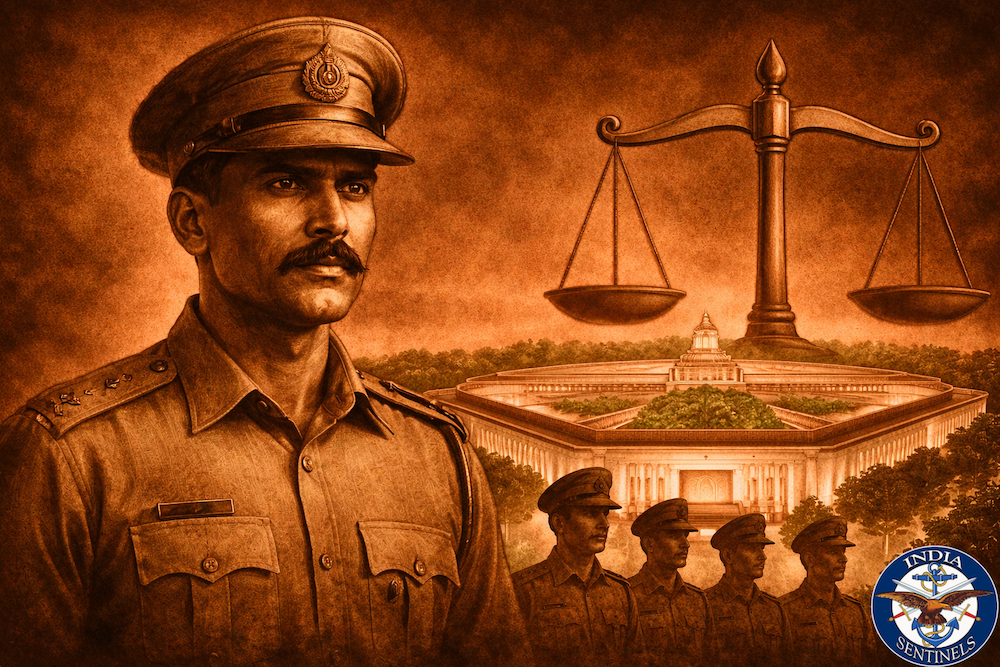
 Illustration for representation. (© India Sentinels 2026–27)
The veterans of the central armed police forces (CAPFs) have served this nation in uniform with uncommon elan, dignity, and devotion. Long after they have laid down their uniforms, they remain ever ready to answer the call of duty – standing for the country at a moment’s notice. Their serving counterparts, shaped in the exacting mould of discipline and soldiering, have upheld the highest standards of professional conduct in the service of national security, prepared round the clock, every day of the year, to meet every challenge to India’s sovereignty and territorial integrity.
Their families, too, have stood as silent pillars of strength through it all.
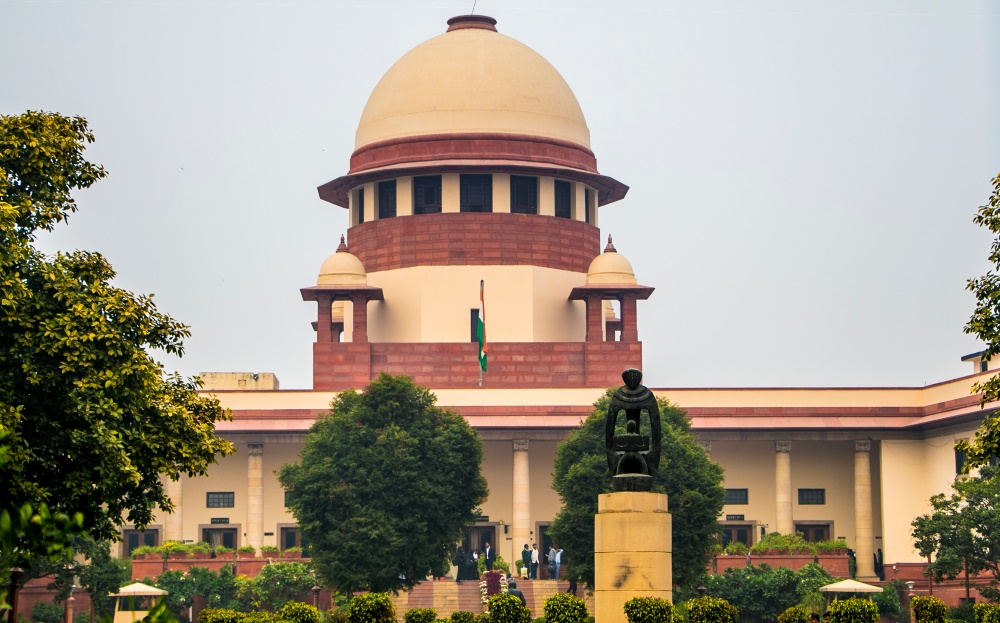
For years, these veterans placed their trust in a political leadership that had promised to honour and stand by the men in uniform – and they believed that promise with all their hearts. For CAPF veterans and serving personnel, the CAPFs (General Administration) Bill, 2026 – introduced to nullify the Supreme Court’s judgments on organized “Group A” services (OGAS) and non-functional financial upgradation (NFFU) – was a nightmare, but not one that arrived without warning.
It had crept in slowly and quietly, as the government aggressively fought OGAS, NFFU, and old pension scheme (OPS) cases in constitutional courts.
Read also: Address the deformities in CAPF structure
One anonymous BJP supporter, voicing the silent anguish of thousands, described what it felt like to have stood firmly with the party for years – not out of convenience, but conviction. The belief had been that this was a leadership that understood strategic thinking, valued long-term institutional strength over short-term optics, and would not permit systematic injustices to endure once it came to power. It was not blind allegiance but trust – deep, considered, and earned. So strong was that trust that even when something appeared wrong on the surface, one could reassure oneself that once the truth reached those at the top, the correction would follow of its own accord.
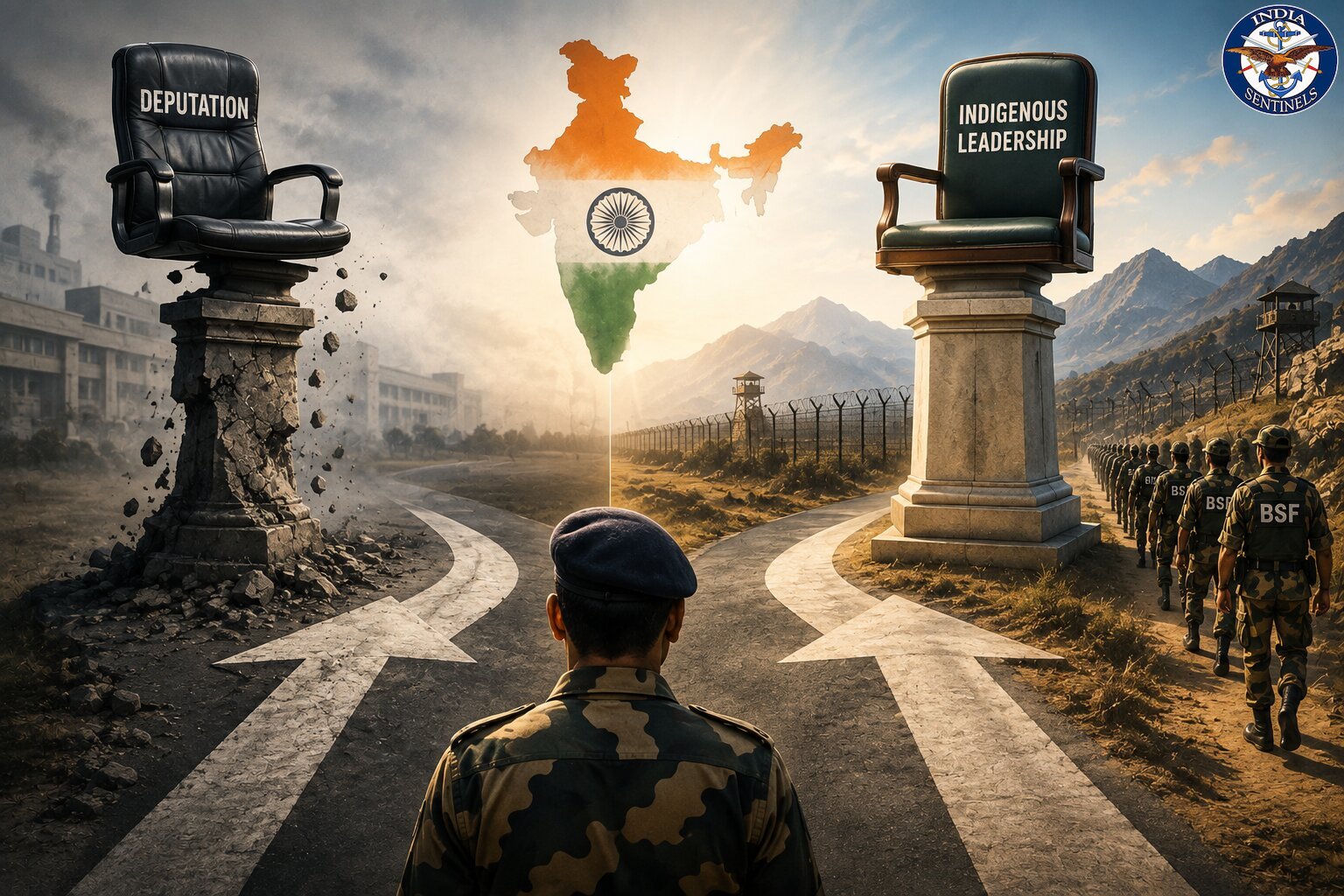
That belief was tested when the armed forces of the Union were designated as “central armed police forces” – a label that served to justify a structural arrangement that never reflected their true character or ethos. Forced to approach the courts to claim their rightful place, many were ridiculed as stooges of the party in power. Yet, through those insinuations and humiliations – sometimes subtle, sometimes blunt – they stood firm. The genuine conviction was that the top political leadership of the BJP was simply not in the know, that the distortions were being engineered by entrenched bureaucratic interests, and that once the truth reached the highest levels, the correction would be swift.
Read also: Are elections compromising our border and national security?
When the judiciary finally intervened, faith was briefly restored. The high court had spoken. When the Supreme Court of India – the highest constitutional court in the land – delivered a clear and favourable verdict, it seemed that the system had at last aligned itself with justice and fairness. But the shock, when it came, was brutal. The correction never came. The judgment was challenged; a review petition was filed and duly failed. The outcome was then left to dissipate, absorbed into a system perfected in the arts of delay, deflection, and dilution.
The anonymous BJP supporter continued to repose faith in the party, telling himself that overcoming systemic resistance takes time, and that a government known for decisive reforms would not lend its weight to something so fundamentally unjust. Even as the contours of what was being contemplated began to emerge with uncomfortable clarity, he chose reassurance over doubt – almost stubbornly, willfully blind to the stark reality that was taking shape.
Read also: Debunking the myth of IPS superiority over CAPF cadres
The final straw – the decisive rupture of faith and trust – was not merely a resistance to a judicial verdict, but its wholesale circumvention through statutory intervention, designed to kill the very essence of what the Supreme Court had upheld. The law was not brought to operationalize the judgment, nor to harmonize competing concerns. It was crafted to effectively override the spirit of that judgment and to deny what the Supreme Court had granted.
This was the moment the shift became undeniable. The CAPFs (General Administration) Bill, 2026 was introduced – not through dialogue, not through consultation with those who would be most affected, but with an arrogant, high-handed certainty. Dissenting voices were ignored as though the outcome had been decided long before the process began.
Read also: Commanded into Crisis – Systematic wrecking of CAPFs’ moral fabric
What was most painful was not the disagreement, but the dismissal. The passage of this bill into law is not a loss for a cadre alone; it is a loss for the nation. It is a loss for the nation because what has been altered is not merely a structure, but a character. The CAPFs have long maintained a rare and vital quality: impartiality and neutrality. Operating in some of the most politically sensitive environments in India, they have remained resolutely apolitical, focused solely on duty and national interest. Through this bill, a very different message has begun to seep through the ranks.
The message is this: merit alone will not suffice; outcomes are controlled elsewhere; and proximity to power matters far more than professionalism.
Read also: Chanakya’s Warning and India’s Shame – How the state fails its CAPFs
When such a realization begins to take root, it changes behaviour. The shift is subtle at first – from service to survival, from institution to individual, from neutrality to alignment. It is not a shift born of choice, but of compulsion imposed by a system that appears to reward alignment over professionalism. Herein lies the real danger: once the conviction takes hold that one’s future depends on one’s relationship with the ruling dispensation – whichever party that may be – politicization sets in, and the line between professionalism and partisanship begins, irrevocably, to blur.
Parties come and go. Governments come and go. But the nation and its institutions must stand and endure. If the neutrality of these institutions erodes, if the trust they command becomes susceptible to compromise, the loss may not be felt immediately – but it will be profound and monumental. Who will pay the price? Not the political parties. Not the opposition. Not the ruling dispensation. It is the nation and its people who will ultimately bear the cost.
Read also: When Leadership Lacks Grounding – The real risk in the CAPF-IPS debate
Let India introspect: does the nation deserve such an outcome?
Disclaimer: The views expressed in the article are the author’s own and don’t necessarily reflect the views of India Sentinels.
Follow us on social media for quick updates, new photos, videos, and more.
X: https://x.com/indiasentinels
Facebook: https://facebook.com/indiasentinels
Instagram: https://instagram.com/indiasentinels
YouTube: https://youtube.com/indiasentinels
© India Sentinels 2026-27