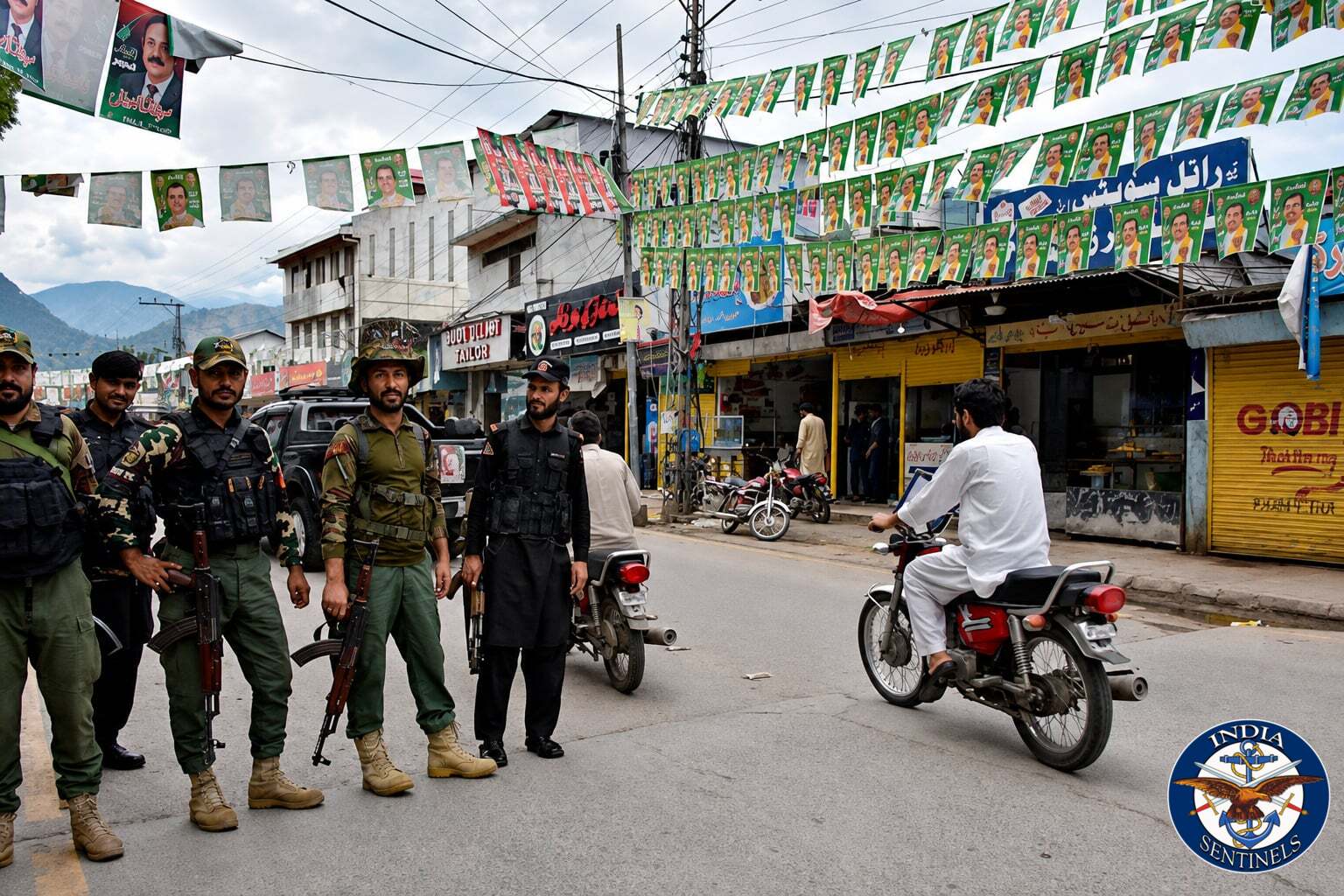
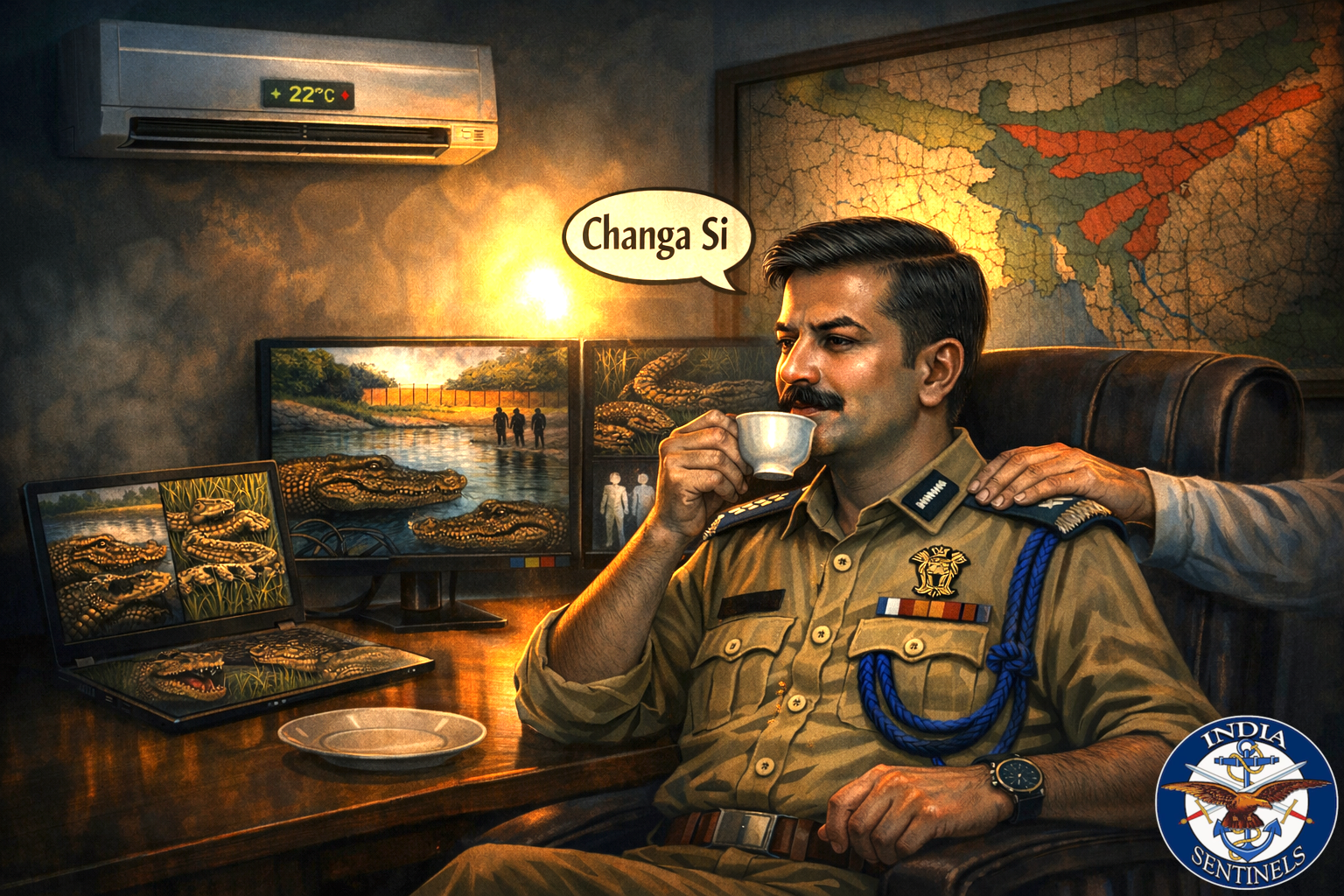
 Illustration for representation. (© India Sentinels 2026–27)
After 38 years of service in the Border Security Force – spending the better part of my adult life analysing terrain, studying demography, decoding crime patterns along some of the most challenging borders in the world, and trying to build genuine security for the people living on those frontiers – I am beginning to wonder whether I wasted my time.
That unsettling thought first crept up on me in 2018. I had written a satirical piece then – you may have read it – about a formation commander in the western theatre of the BSF – the largest border-guarding force in South Asia, who, probably inspired by two generous pegs of spirits in the serene setting of an officers’ mess, had a flash of brilliance. He proposed training mongooses, guided by local snake charmers, to sniff out transborder smuggling tunnels along the India-Pakistan border.
The “Nevala Commandos” – Mongoose Commandos, no less – were raised with great enthusiasm. The subordinates, well-fortified by a few additional pegs, unanimously applauded the idea. Practical objections, such as the absence of authorization for mongooses on the force’s establishment, were waved away with the confidence that only spirits can inspire.
That experiment never quite took flight. The force’s professional cadre, set in its ways and frustratingly resistant to thinking outside the box, let the idea wither. But visionary ideas, as we are now learning, are immortal. They simply wait for someone with sufficient imagination – and authority – to breathe life back into them.
That someone has arrived.
The Union home minister, Amit Shah, has, with characteristic decisiveness, revived the spirit of the mongoose proposal – albeit with a more ambitious cast of characters. The BSF is now actively exploring the deployment of crocodiles and venomous snakes along the riverine gaps of the India-Bangladesh border. A confidential signal message, reportedly circulated on March 26 to senior frontier-level officers in the BSF’s eastern and northeastern sector headquarters, apparently read: “Exploring use of reptiles in riverine gaps in line with Honourable HM’s direction.”
There you have it. The Union home minister’s direction. I shall not pretend I am not impressed.
To be fair – and I am always fair – the underlying problem is entirely real. Of the 4,096-kilometre border between India and Bangladesh, approximately 175 kilometres consists of rivers and marshy terrain where conventional fencing is physically impossible. Flooding, shifting riverbeds, and dense vegetation make these stretches a persistent headache. They are also, predictably, the preferred routes for infiltrators, smugglers, and traffickers.
The BSF has tried everything: fast-track fencing, sensors and infrared cameras, over 5,000 body cameras, night-vision equipment, drones, AI-enabled surveillance, etc, under the “Comprehensive Integrated Border Management System” (CIBMS). And yet, the riverine gaps persist, stubbornly unplugged.
So naturally, the next logical step is crocodiles.
The BSF director general, Praveen Kumar, wasted no time. After a meeting on February 9 at which the matter was discussed at the highest levels, signal messages went out on March 20 directing field officers to explore the “operational feasibility” of reptile deployment. Senior sector commanders – deputy inspectors general, no less – have been asked to submit “action taken” reports within a time-and-date deadline.
I have served in this force for nearly four decades. I have written operational assessments, feasibility studies, and threat analyses covering everything from insurgencies to natural disasters. Never once did I imagine I would live to see the day when the phrase “operational feasibility of reptile deployment” would appear in a BSF signal.
Life, as they say, is full of surprises.
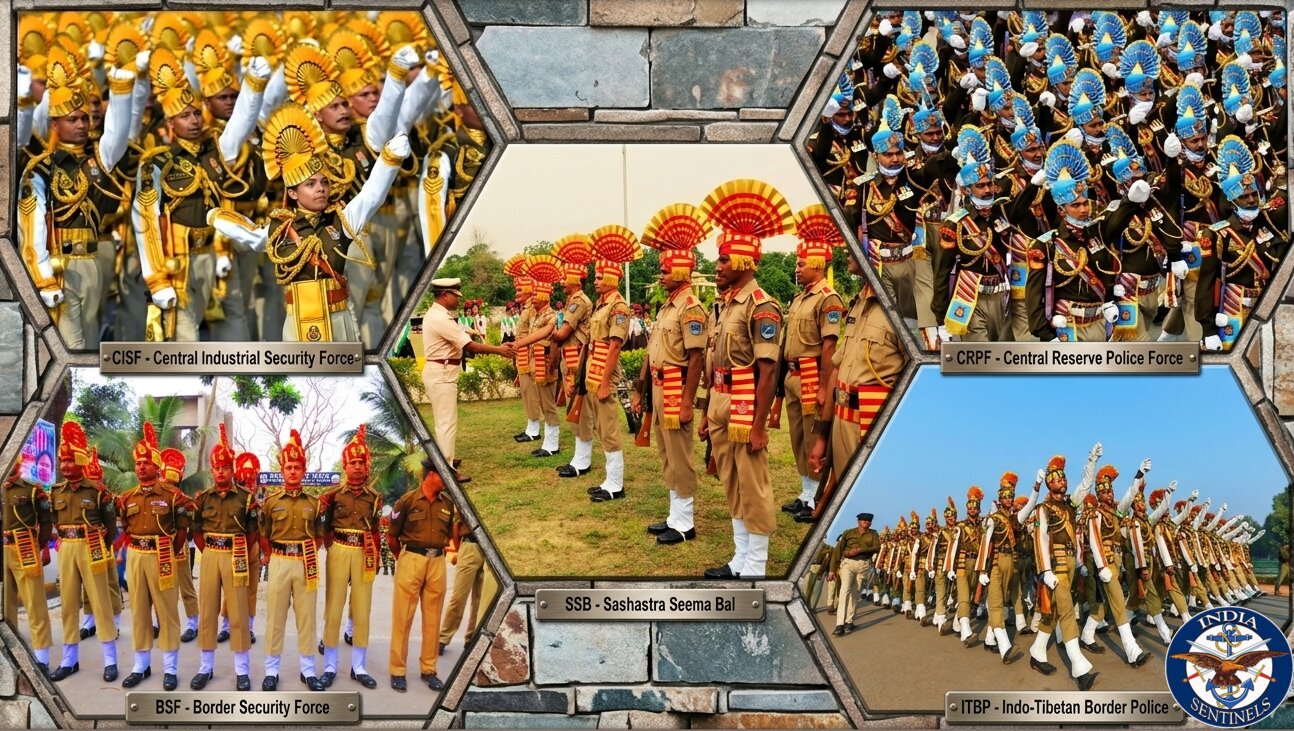
I should, at this point, acknowledge the role of the gentleman who so promptly and unquestioningly acted on the minister’s direction. He belongs to what we in the forces respectfully – and sometimes through gritted teeth – call the “elite service”. The Indian Police Service or IPS, for those unfamiliar with the euphemism.
Now, I have nothing but admiration for the IPS. They are, as an institution, remarkable. They are all-knowing. They are equally at home in any domain – policing a metropolis, administering a district, heading a paramilitary force, or, apparently, directing the acquisition and operational deployment of crocodilians. They require no domain-specific knowledge, no prior experience of the operational environment, and certainly no prior familiarity with the ethos of the force they command.
One is reliably informed that the current BSF supremo has not donned a uniform in nearly two decades. But then, why should such trivialities matter when vision and connectivity are so abundantly available?
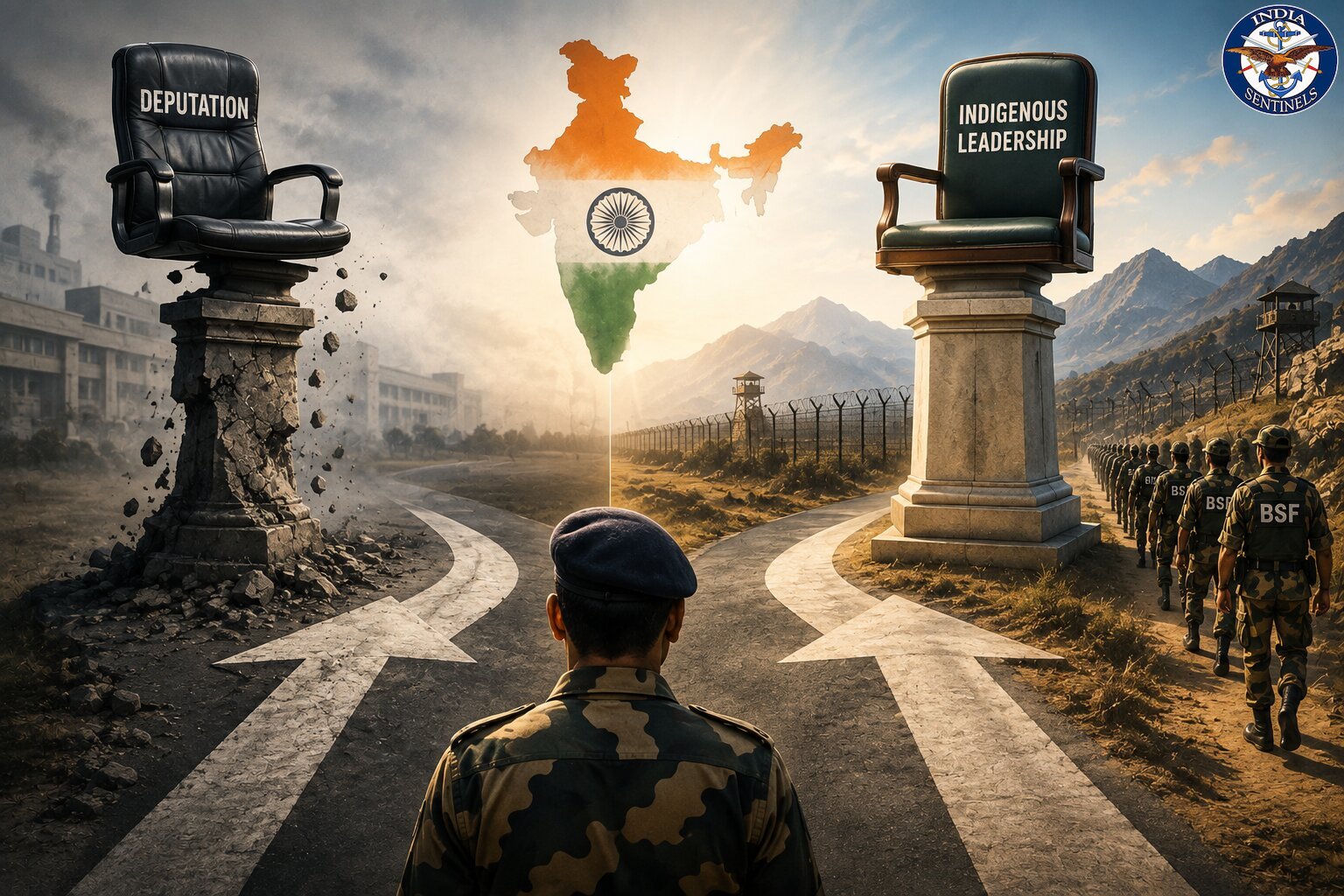
If you find that assessment unfair, consider that the recently enacted administrative reform act – which, among other things, entrenches IPS officers at the helm of security forces while further diluting the role of professional cadres – was designed to do precisely this: ensure that “non-biological” intelligence always supersedes the lived, ground-level, mud-on-boots kind.
I use the term “non-biological” with the deepest affection. These are individuals who have, apparently, transcended the ordinary human need for direct experience. They know. They simply know.
But enough preamble. Let me be constructive.
The BSF runs an excellent training facility located some 300 kilometres south of New Delhi, near Tekanpur in Madhya Pradesh. There happens to be a sizeable lake on the campus, home to a thriving population of mugger crocodiles. The facility currently houses a Tactical Training Wing, a Specialist Training Wing, and the National Dog Training Centre. I would humbly suggest shutting down the first two – they train human beings, and we are moving beyond that – and merging the entire campus into a dedicated National Reptile Training Centre.
Once a core group of trained crocodiles completes its induction course – presumably in riverine domination, night patrolling, and the escalation-of-force continuum – this core group can be tasked with training subsequent batches. The savings on human trainers will be considerable.
The snakes, meanwhile, present their own administrative challenges. Venomous species are notoriously difficult to motivate through incentives. You cannot offer them out-of-turn promotions. They have no interest in pension schemes. But I am confident that the elite service will devise a suitable personnel-management framework in due course.
Since we are in the business of expanding the BSF’s non-human establishment, allow me to make a few additional proposals – entirely in the national interest, and without any expectation of a consultancy fee.
The owl should be inducted immediately. Owls have exceptional night vision. They are widely regarded as symbols of wisdom across cultures – notably, they adorn the crest of the Defence Services Staff College in Wellington. Their silent flight gives them a natural advantage in covert surveillance. Deployed along the border’s dark and connectivity-poor stretches, owls could provide advance intelligence to the reptile units below. They would also make the much-discussed but extremely expensive deployment of AI-enabled drones largely redundant.
Wisdom over algorithms – what a concept.
The bat, too, deserves serious consideration. Bats are equipped with a sophisticated, built-in sonar system that enables them to navigate flawlessly in complete darkness, distinguish between obstacles and targets, and swoop at high speed with lethal precision. Properly trained – and I see no reason why they cannot be – bats could handle night domination along land borders, identifying and deterring unscrupulous characters without any drone support.
And then there are the honeybees. Before you dismiss this, consider: the Indian Army has, in counterinsurgency operations, documented cases where disturbed bee colonies served as inadvertent but devastatingly effective area-denial systems. With proper training and behavioural conditioning – perhaps through a dedicated Bee Training Wing at Tekanpur – honeybees could be directed to intercept border violators.
The sting in this particular tail would, quite literally, be the sting.
I would also draw attention to another resource that India has in abundance and that goes entirely unutilized in our border strategy: stray cattle. These animals are present in vast numbers in the border districts of West Bengal and Assam. They are sturdy, unafraid, and, when provoked, capable of a head butt that would give a trained soldier pause. Their deployment as a non-lethal, crowd-deterrent mechanism along the border would be consistent with the government’s recently articulated non-lethal strategy, would save considerable ammunition costs, and – not insignificantly – would strengthen India’s fraternal ties with Bangladesh, given the shared reverence for the animal.
One must not overlook the diplomatic dividend.
Now, I anticipate the objection that introducing thousands of venomous snakes and large crocodilians into 175 kilometres of densely populated riverine terrain might have certain unintended consequences for the civilian populations on both sides of the border. The water rises seasonally. The animals move. Villages are close. People farm. People fish.
These concerns have, I am glad to report, already been flagged by BSF field officers who are “apprehensive” about the proposal. They are right to be. As India Sentinels has reported, there is presently no operational roadmap, no decision on who would actually catch these animals or in what numbers, and no clarity on how the inevitable flooding would affect the reptile deployment plan.
But I would caution against excessive negativity. Field officers, as we know, always have been apprehensive. That is their nature. They think about implementation. The visionaries think about vision. Let us not confuse the two.
Our American friends, to be fair, have shown the way. The Trump administration’s detention facility in Florida – unofficially dubbed “Alligator Alcatraz” – is surrounded by the Everglades wetlands, relying on alligators, crocodiles, and pythons as natural deterrents against escape. Critics have argued that using dangerous predators to contain human beings is ethically troubling and potentially in violation of basic rights. But the home minister’s visionary gaze has clearly extended across the Atlantic and found inspiration where others saw controversy.
India, after all, has always been a civilization that learns from the best – and then does it bigger.
Now, let me close with the larger strategic picture, which I think is being missed in the fog of operational objection.
The deployment of crocodiles, snakes, owls, bats, honeybees, and stray cattle along our borders will, if executed comprehensively, enable a substantial downsizing of the BSF. Fewer soldiers means fewer salaries, fewer pensions, fewer officers’ messes, and fewer occasions for formation commanders to have two chhotas and conceive impractical ideas. The government will make handsome savings – savings that can, as any observer of our political economy will appreciate, be deployed for various productive purposes.
The manpower thus released need not remain idle. BSF personnel are disciplined, trained, and physically robust. India’s top industrialists – always on the lookout for reliable labour at minimum wages – will snap them up immediately.
Everybody wins.
And finally, with the professional cadre phased out and the reptiles installed, the IPS will be in complete, undiluted command of the force. No more inconvenient questions about operational experience. No more advocacy from the cadre for better terms and conditions. No more litigation. Just a clean, lean, crocodile-enabled border force, commanded from airconditioned offices in New Delhi by gentlemen who have never, and need never, set foot in a riverine marshland at two in the morning.
I have served this force with every ounce of what I had. I believe in it still. That is precisely why I cannot remain silent when decisions of this nature are made – decisions that treat the BSF not as a professional force with hard-earned expertise, but as an administrative challenge to be solved by whoever happens to be available, however unqualified, and whatever species they may belong to.
The reptiles, at least, will not file grievance petitions. The rest of us, however, might.
Note: This is a satire.
Disclaimer: The views expressed in the article are the author’s own and don’t necessarily reflect the views of India Sentinels.
Follow us on social media for quick updates, new photos, videos, and more.
X: https://x.com/indiasentinels
Facebook: https://facebook.com/indiasentinels
Instagram: https://instagram.com/indiasentinels
YouTube: https://youtube.com/indiasentinels
© India Sentinels 2026-27