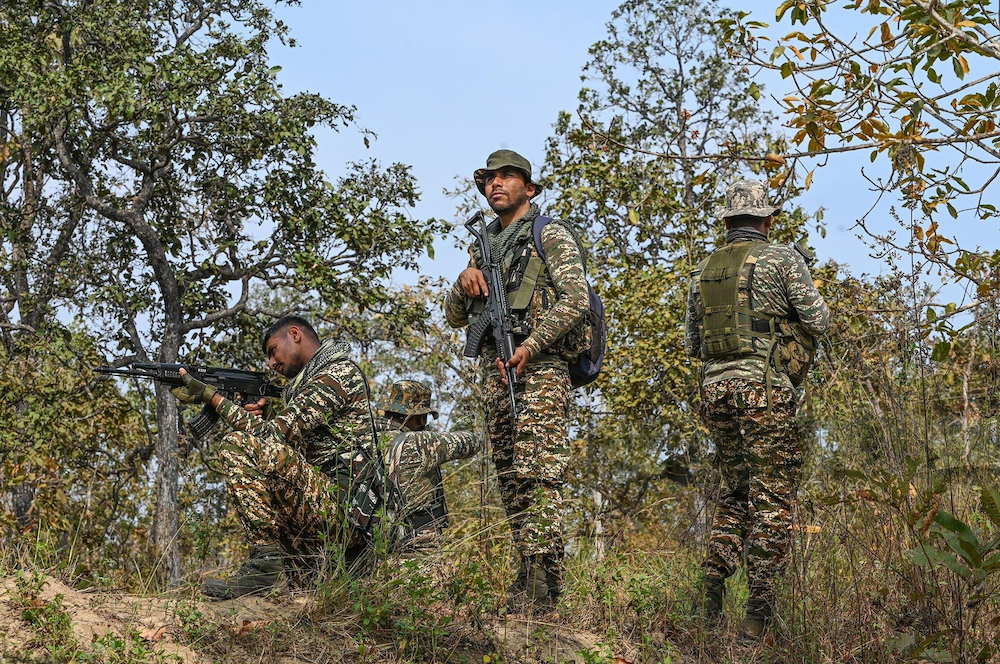
 CRPF personnel deployed in an anti-Naxalite operation in Chhattisgarh. (File photo)
Let me say this plainly, and without apology: the claim that officers of the Indian Police Service are inherently superior to cadre officers of the central armed police forces isn’t only misplaced but fundamentally flawed. After decades of service on the frontlines of India’s most demanding and dangerous borders, I have earned the right to say so.
This narrative is a product of administrative convenience and historical habit, not of any honest reckoning with competence, training, or operational effectiveness. It’s a myth that has persisted too long and caused too much institutional damage to be left unchallenged.
Read also: Commanded Into Crisis – The systematic wrecking of CAPFs’ moral fabric
UPSC Argument is Misleading
The most commonly trotted-out defence of IPS “superiority” is that its officers are selected through the Indian Civil Services Examination conducted by the Union Public Service Commission. This argument, on its surface, sounds reasonable. Dig even a little deeper, and it collapses.
CAPF officers – specifically, assistant commandants – are also recruited through a rigorous, multi-stage UPSC examination. Candidates must clear a written examination, pass stringent physical efficiency tests, and face a searching interview board. They then undergo structured training regimes tailored specifically to the demands of armed policing, border management, and counterinsurgency operations.
These aren’t casual entrants to government service.
If UPSC selection alone is the yardstick for superiority, then one must logically apply the same standard to officers commissioned into the Army, Navy, and Air Force through UPSC examinations – and then declare them “superior” to IPS officers. The absurdity of that conclusion should be self-evident. Different services exist to fulfil different national imperatives. Their entry mechanisms confer professional identity, not hierarchical worth.
The UPSC argument is a red herring – and a lazy one, at that.
Read also: When Leadership Lacks Grounding – The real risk in the CAPF-IPS debate
Divergent Roles, Not a Hierarchy of Worth
The IPS is, at its core, a civil police service. Its officers are trained and deployed for maintaining law and order, criminal investigation, and internal security within the states of the Indian Union. These are honourable and demanding responsibilities, and I don’t diminish them.
However, the CAPFs are something else entirely. They are specialized armed forces of the Union, each endowed with a precisely defined operational mandate. Consider what that means in practice.
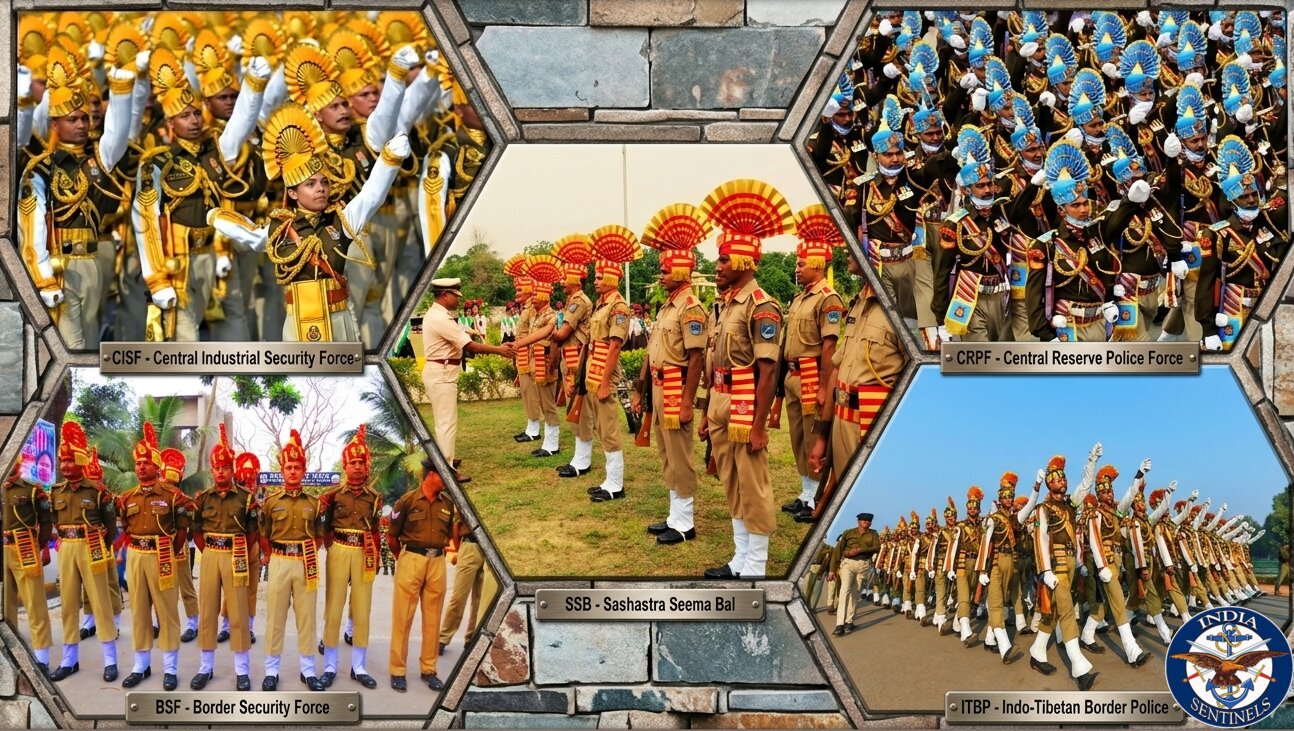
The Border Security Force, the Indo-Tibetan Border Police, and the Sashastra Seema Bal are the sentinels of India’s international frontiers – from the scorched deserts of Rajasthan and the tidal flats of the Rann of Kutch to the frozen heights of Ladakh and the rain-lashed ridges of the northeast. They operate under conditions of sustained physical hardship, constant threat, and remote isolation that most civil postings can’t approximate.
The Assam Rifles, India’s oldest paramilitary force, functions in active counterinsurgency roles in some of the most volatile terrain in the subcontinent, operating under the direct operational command of the Indian Army. Its officers are, to all practical purposes, military officers working in a military environment.
To compare these mandates with civil policing and then declare one set of officers “superior” is to misunderstand both professions. It’s like comparing a trauma surgeon with a general practitioner and asking which is the better doctor. The question itself is malformed.
Read also: Stagnant Ranks, Broken Morale – The cost of CAPF’s skewed HR policies
Where IPS Has No Role
Here is an operational reality that proponents of IPS superiority rarely acknowledge: in times of heightened border tensions or actual hostilities, forces such as the BSF and the ITBP come under the direct operational control of the Indian Army. In such circumstances, there is simply no functional space for IPS officers. CAPF officers step forward, lead their troops under fire, command forward posts and patrol formations, and execute missions that bear directly on national security.
India has had no shortage of such moments. During the 1971 war with Pakistan, BSF jawans and officers fought alongside the Army in operations that directly shaped the outcome of the conflict in the eastern theatre. During the Kargil conflict of 1999, BSF personnel fought hard and protected the Indian posts while ITBP personnel maintained critical supply lines and forward positions in some of the most punishing terrain on earth. The CRPF is India’s largest CAPF and its most battle-hardened. For decades, its officers and jawans have borne the heaviest burden of the fight against the Naxalite insurgency – a grinding, brutal, asymmetric war fought in the dense forests of Chhattisgarh, Jharkhand, Odisha, and Telangana.
Are these policing operations? It doesn’t require more than average IQ to understand that they are combat missions, conducted in terrain that actively works against the security forces.
In none of these scenarios did the question of IPS authority arise. The CAPF officer was the commander on the ground. That reality should settle the question of “superiority” more conclusively than any administrative gazette notification.
Read also: Border Security Force is an armed force, not police, nation must know
Experience Gap Gazette Can’t Bridge
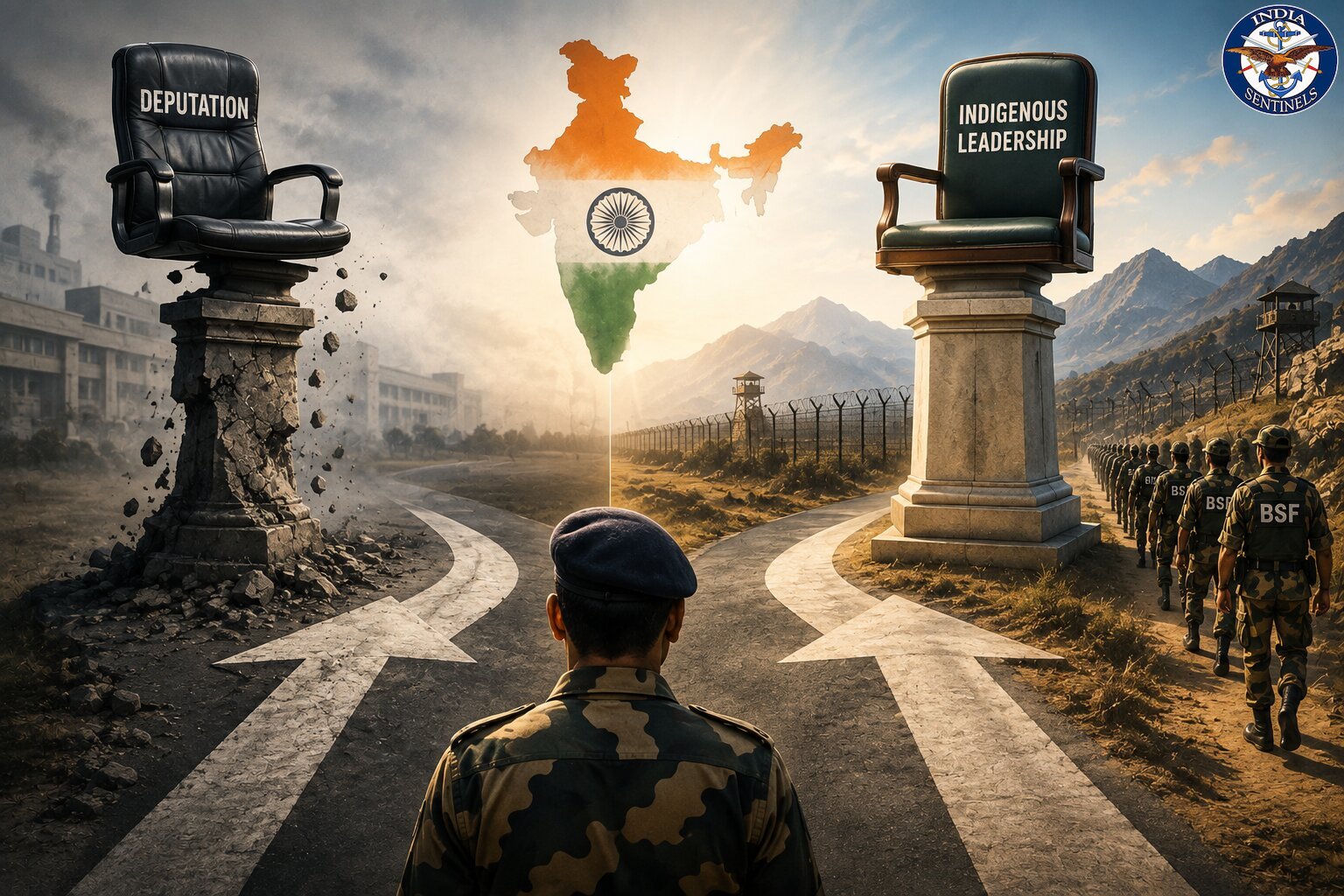
Perhaps the most troubling manifestation of this misguided hierarchy is the lateral induction of IPS officers into senior CAPF positions – at the level of deputy inspector general and above – without any prior service in these forces. This practice has been a source of deep institutional frustration for decades, and rightly so.
An IPS officer, however talented and well-intentioned, who arrives at a CAPF DIG’s office without ever having managed a border outpost, led a column through high-altitude terrain, or understood the operational doctrines of that specific force, brings with them a competence gap that goodwill alone can’t fill. They may lack ground-level familiarity with border management protocols; they may have little understanding of force-specific tactics and culture; they may never have experienced the particular pressures of command in insurgency-prone or glacially hostile environments.
Meanwhile, the CAPF cadre officer who has been passed over for that posting has spent 20 or 25 years within the same force – rising from assistant commandant to commandant to deputy commandant, accumulating operational exposure, institutional knowledge, and the trust of the jawans under their command. That officer knows the terrain. They know the threat. They know the force.
To suggest that the lateral inductee is “inherently superior” to this officer – simply by virtue of service cadre – isn’t a bureaucratic position but an affront to professional logic.
Read also: Chanakya’s Warning and India’s Shame – How the state fails its CAPFs
Competence Isn’t a Cadre Monopoly
I want to be precise here, because precision matters in this debate. The IPS produces capable, committed, and often brilliant officers. India’s police forces have officers who have distinguished themselves in counterterrorism operations, disaster response, organized crime investigation, and administrative leadership. I have worked alongside IPS officers, and I know their calibre.
However, competence isn’t the monopoly of any single service. It never has been, and the institutional conceit that it’s has cost the CAPFs – and by extension, India – dearly.
CAPF officers serve in conditions that test leadership in its rawest form: forward posts at 18,000 feet where oxygen is thin and supply lines are tenuous; riverine patrols along the Brahmaputra where the current and the smuggler are equally treacherous; jungle operations in Chhattisgarh and Manipur where the enemy is invisible and the consequences of error are immediate. Their leadership isn’t demonstrated in well-lit conference rooms or at carefully managed press briefings. It’s demonstrated in forward positions where the weather, the terrain, and a determined adversary are the only audience.
That kind of leadership deserves recognition, not condescension.
Read also: My Identity Crisis – The CAPF soldier’s perennial dilemma
Case for Structural Reform
The persistence of this hierarchy isn’t merely a matter of hurt feelings or institutional vanity. It has structural consequences. When senior CAPF positions are routinely filled by lateral IPS inductees, career progression for cadre officers stalls. The most experienced and operationally seasoned officers hit a ceiling that no amount of performance can break through. This discourages talent, hollows out institutional depth, and sends precisely the wrong signal to the officers who are doing the hardest work in the most difficult places.
Several committees and reports over the years – including recommendations of the Pay Commissions and various administrative reform panels – have flagged this disparity and called for greater cadre autonomy and parity for CAPF officers. Progress has been slow, and the inertia of the administrative establishment has been formidable. But the logic of reform is inescapable.
The solution isn’t to demean the IPS. It’s to give the CAPFs what they have long deserved: command structures that reflect operational reality, career pathways commensurate with professional contribution, and an end to the fiction that administrative hierarchy equates to professional worth.
Read also: End Colonial Charade – Implement SC ruling on CAPF officers now
Respect for Roles
The narrative of IPS superiority is a relic of a colonial administrative imagination that ranked desk above field, urban above frontier, and civil above armed. It doesn’t reflect the demands of modern Indian security, nor the realities of the men and women who guard this country’s borders.
India’s security architecture rests on multiple pillars: civil police, armed police forces, and the defence services. Each is indispensable. Each has a domain. None is inherently superior to the others in the ways that matter most – which is to say, in operational effectiveness, professional integrity, and dedication to national service.
CAPF cadre officers aren’t subordinate professionals awaiting the grace of a superior service to lead them. In fact, they are specialists – highly trained, operationally seasoned, institutionally irreplaceable – entrusted with some of the most consequential responsibilities in the Indian security establishment.
To deny them parity of esteem is strategically reckless apart from being unjust.
India’s borders don’t care about service cadres. The officers who guard them deserve better than a bureaucratic hierarchy that does.
Disclaimer: The views expressed in the article are the author’s own and don’t necessarily reflect the views of India Sentinels.
Follow us on social media for quick updates, new photos, videos, and more.
X: https://x.com/indiasentinels
Facebook: https://facebook.com/indiasentinels
Instagram: https://instagram.com/indiasentinels
YouTube: https://youtube.com/indiasentinels
© India Sentinels 2026-27