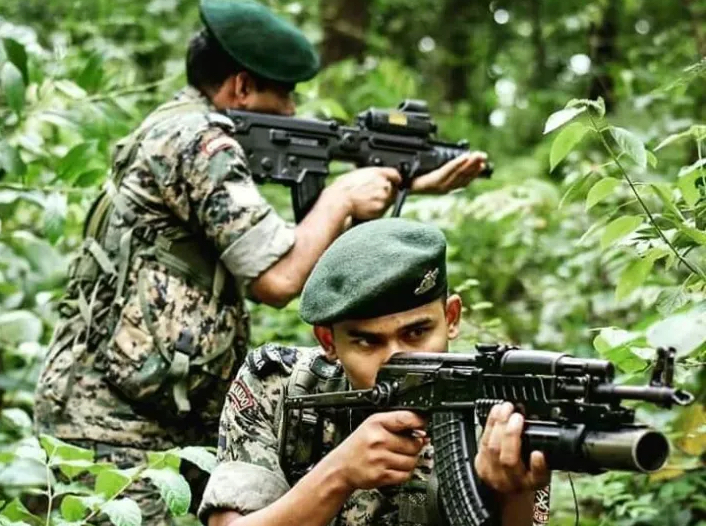
 Two commandos of the CRPF’s elite CoBRA special operations unit during jungle-warfare training. (Photo for representation.)
“The day the soldier has to demand his dues will be a sad day for Magadha, for then, on that day, you will have lost all moral sanction to be king.” — Chanakya
These words, attributed to the ancient strategist Chanakya more than two millennia ago, resonate with a painful immediacy in present-day India. When the men and women who guard the nation’s borders and maintain its internal peace are compelled to seek redress from courts of law rather than from the very government they serve, something has gone fundamentally wrong.
That is precisely where the central armed police forces, or CAPFs, find themselves today.
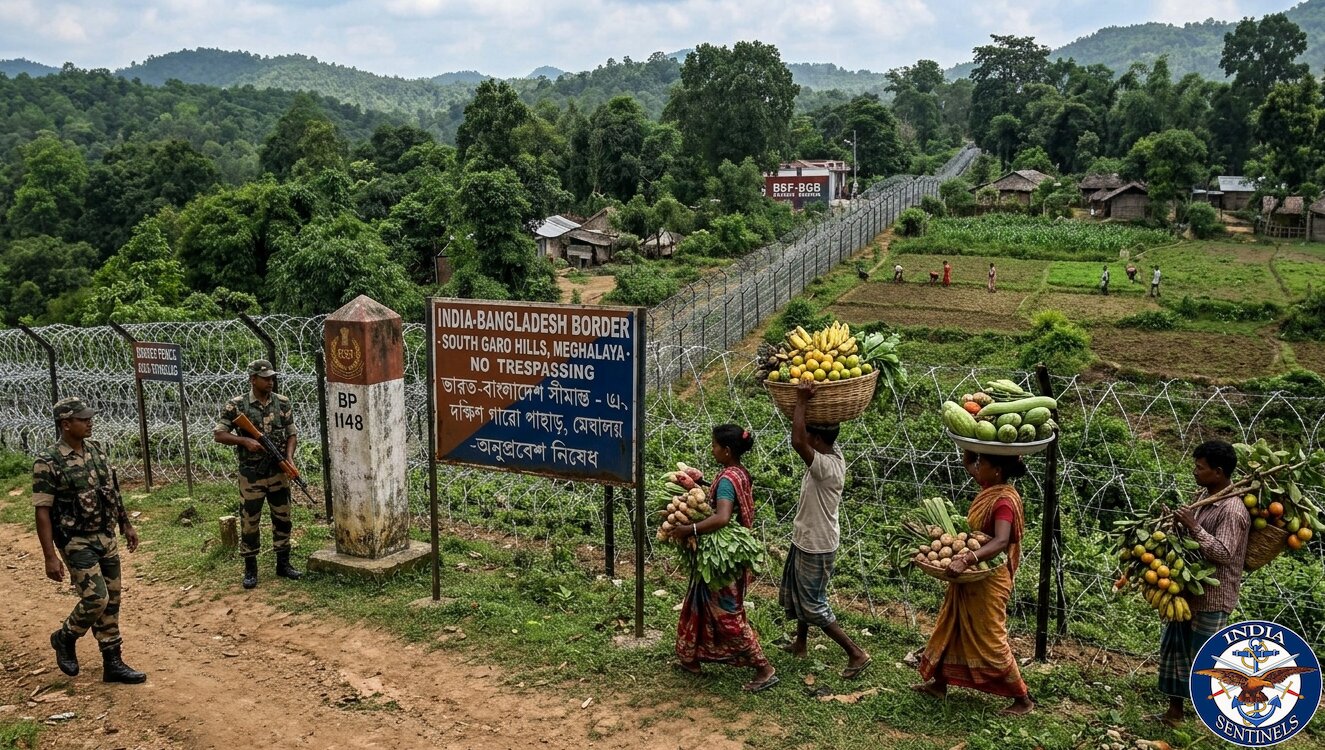
The CAPFs – comprising the Border Security Force (BSF), the Central Reserve Police Force (CRPF), the Central Industrial Security Force (CISF), the Indo-Tibetan Border Police (ITBP), and the Sashastra Seema Bal (SSB) – are the soldiers of the Indian state. They are the cornerstone of national security, omnipresent from Kashmir to Kanyakumari, from the high-altitude glaciers of Ladakh to the dense jungles of Chhattisgarh. No serious assessment of India’s security architecture is possible without acknowledging their indispensable role.
Together, these forces number over a million personnel. They dominate every theatre of conflict that does not quite rise to the threshold of conventional war, yet demands no less in terms of courage, discipline, and sacrifice. They man the borders, battle left-wing extremism, manage communal crises, and secure mega-events. They are, in every meaningful sense, the shield between the Indian citizen and chaos.
And yet, the system fails them.
Read also: Give CAPF officers what Supreme Court ordered – and what they earned
A History Written in Blood
The valour of CAPF personnel is not in question – it is documented in blood. On October 21, 1959, in the icy, forbidding terrain of the Chenmo valley in Ladakh, 10 CRPF soldiers laid down their lives fighting a Chinese incursion at Hot Springs. This date is now observed as Police Commemoration Day across India. It was among the first and most telling instances of CAPF soldiers confronting an external adversary on Indian soil.
The BSF’s contribution to the 1971 war with Pakistan is equally storied. Acting as the vanguard of the Indian advance in both the eastern and western theatres, BSF units played a pivotal role in ensuring that Srinagar and the Kashmir valley did not fall prey to Pakistan-sponsored militancy in the decades that followed.
The ITBP, meanwhile, has been at the forefront of India’s response to Chinese incursions along the line of actual control (LAC), including during the prolonged standoff in eastern Ladakh from 2020 onwards.
The SSB quietly secures India’s open borders with Nepal and Bhutan, borders that present unique challenges precisely because they are designed to be porous.
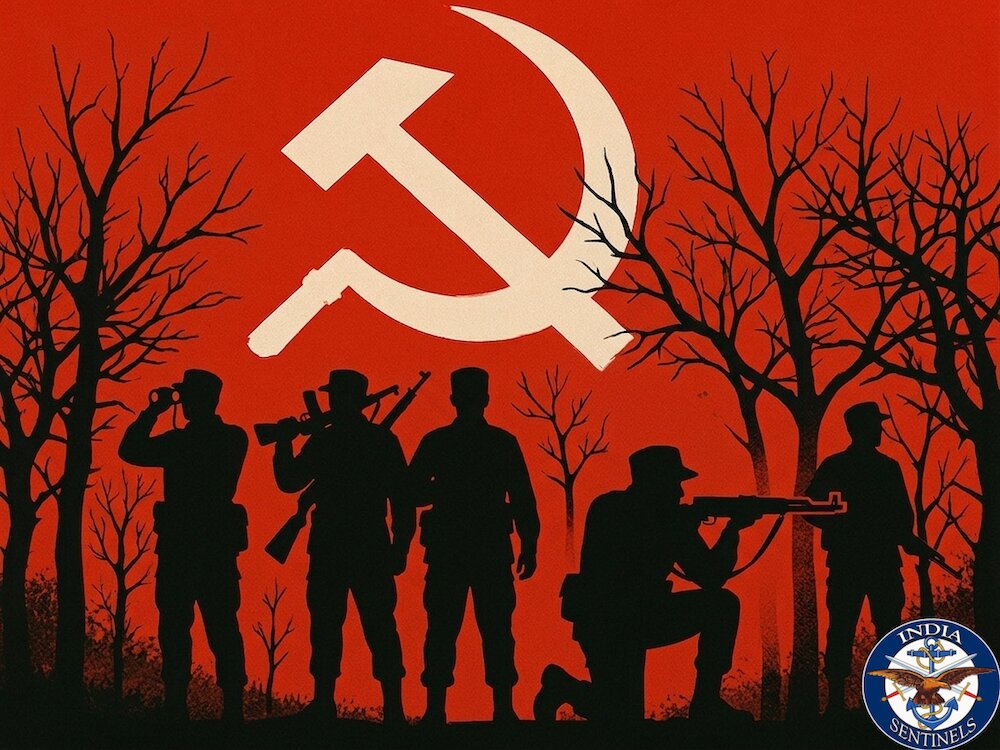
The CRPF’s role in countering Naxalism – India’s longest-running internal security challenge – deserves particular mention. For decades, CRPF battalions have operated in the most inhospitable terrain in Chhattisgarh, Jharkhand, and Odisha, bearing the brunt of Maoist ambushes. It is their grit and determination that has pushed the left-wing extremist movement to its current, diminished state.
Thousands of CAPF officers and men have paid with their lives in service to the nation. Their sacrifice is beyond dispute. The question is whether the nation – through its government – is honouring that sacrifice in anything more than words.
Read also: Why 8th pay panel must recognize CAPF personnel as true soldiers
Praise Without Substance
The political leadership of India has never been shy of lauding the CAPFs. During the 87th Raising Day parade of the CRPF, the Union home minister, Amit Shah, declared that India’s internal security could not be imagined without the CRPF and paid tributes to those who had fallen in the line of duty. Similar encomia have been delivered at the raising day functions of every CAPF. Prime-ministerial addresses, home-ministerial speeches, and statements by dignitaries across the political spectrum have consistently celebrated the courage and commitment of these forces.
But symbolism, however heartfelt, cannot feed a family, clear a promotion, or address years of stagnation in rank. The men and women of the CAPFs are well aware of the gap between the applause they receive at parades and the indifference they encounter when they submit service grievances. That gap is not merely demoralizing – it is corrosive to the professional edge that national security demands.
Read also: SC judgment on CAPF officers is final. Implementation must begin
Stagnation Crisis: A Parliamentary Indictment
The most damning assessment of CAPF service conditions has come not from disgruntled veterans or activist groups, but from Parliament itself. The department-related parliamentary standing committee on home affairs, chaired by the former home minister, P Chidambaram, examined the state of these forces in detail. Its 215th report is a comprehensive indictment of the neglect that CAPF personnel have endured.
The committee found that CAPF personnel faced prolonged working hours, severe stagnation in rank, high attrition, inadequate infrastructure, outdated arms and ammunition, insufficient accommodation, and poor training facilities. These are not minor inconveniences but structural failures that directly erode combat readiness.
The stagnation figures make for grim reading. In the CISF, a constable waits 22 years to be promoted to head constable and 16 years to reach the rank of assistant sub-inspector (ASI) – against an eligibility threshold of five years. In the CRPF, a constable (general duty) reaches head constable rank after 16 years of service, and it takes another eight to 10 years to become an ASI. The climb from ASI to sub-inspector (SI) takes a staggering 25–27 years; from SI to inspector, a further 30 to 31 years.
The situation in the border-guarding forces is no better. In the BSF, a constable waits 20 to 22 years for promotion to head constable. The head constable then spends another nine to 10 years before becoming an ASI. The rank of SI takes about 12 years to attain from ASI, and the step from SI to inspector requires a further eight to 10 years.
To put this in stark human terms: inspectors of the BSF who joined as sub-inspectors in 2005 were still serving as inspectors 16 years later, with no relief in sight.
These are not the timelines of a modern security force. Rather, they are the timelines of a workforce that has been systematically denied career progression, and the consequences for morale and professionalism are entirely predictable.
Read also: My Identity Crisis – The CAPF soldier’s perennial dilemma
Officer Cadre: Equally Forgotten
Stagnation in the CAPF officer cadre is equally acute, and arguably more damaging to institutional capability, since it is the officers who provide the professional leadership that transforms willing soldiers into effective fighting units.
In both the BSF and CRPF, it takes 11 to 13 years to earn one’s first promotion to deputy commandant. Officers of the 1997 batch were still serving as seconds-in-command after 29 years of service. Officers of the 1990 batch were still deputy inspector generals after 35 years. By contrast, their counterparts in the Indian Police Service (IPS) pick up a selection-grade rank within 13 years of service.
The ITBP and SSB fare slightly better in officer promotions, but the broader picture across all CAPFs is one of systemic neglect. Most officers are increasingly choosing to seek premature retirement rather than wait indefinitely for advancement. The forces thus loses precisely the talent it can least afford to lose.
There is a particularly troubling dimension to this problem. The government has, in recent years, tinkered with the rank structures of several CAPFs, ostensibly to address stagnation. The result, however, has been the creation of additional positions in subsidiary, non-combat cadres while the combat cadre continues to languish. Although CAPFs have been given additional directors general for human resources – a bureaucratic addition that has produced no discernible improvement in the human resource profile of the forces.
It is a perverse irony that the CAPFs may be the only combat forces in the world whose personnel policies systematically prioritize non-combat cadres over combat ones.
Read also: End Colonial Charade – Implement SC ruling on CAPF officers now
When Courts Become the Last Resort
The CAPFs have robust internal grievance redressal mechanisms. At the battalion level, commanding officers address individual concerns through formal interviews, informal interactions, and sainik sammelans – collective meetings designed to surface and resolve grievances before they fester. This system works reasonably well for matters within the unit’s competence.
The breakdown occurs at a higher level. When grievances relate to financial entitlements, promotion policies, or other human resource matters that require action by force headquarters or the ministry of home affairs, the system begins to fail. Protracted delays, non-responses, and deferred decisions leave personnel with little choice but to approach the courts – a step that no professional soldier takes lightly, and one that represents a fundamental breakdown in the relationship between the state and its armed servants.
Two recent cases illustrate the depth of this failure with particular clarity. In a judgment dated September 9, 2024, a court ruled that petitioners in the grade pay of ₹4,800 were entitled to a grade pay of ₹5,400 after four years of service in the lower grade. The judgment was clear and unambiguous. A further order dated November 13, 2025, directed that the petitioners’ salaries be re-fixed within four months.
As of the writing of this article, the judgment remains unimplemented.
The second case concerns the organized “Group A” service (OGAS) and the non-functional financial upgradation (NFFU) for CAPF cadre officers. Court directions on this matter have also been ignored, forcing the affected officers to file contempt petitions. The government’s response has been to signal its intent to seek statutory intervention – in other words, to use legislative means to circumvent judicial direction.
Far from being isolated instances of bureaucratic tardiness, they represent a pattern of institutional indifference to the legitimate claims of men and women who have given their careers, and in many cases their health, to the service of the nation. The courts have spoken; the government has not listened. The message sent to serving and retired CAPF personnel is unmistakable: your service is valued in speeches, not in policy.
The volume of litigation involving CAPF personnel is itself a barometer of institutional health. A force whose members must routinely go to court to secure their entitlements is a force whose morale is under sustained assault. The ministry of home affairs and CAPF leadership must recognize this not merely as an administrative problem, but as a threat to operational effectiveness.
Read also: Supreme Court’s CAPF judgment demands immediate implementation
Solutions Exist
The challenges facing the CAPFs are formidable, but they are not intractable. Solutions exist; what is lacking is the political and bureaucratic will to implement them.
On the question of stagnation, the parliamentary committee’s 215th report made a specific recommendation that merits serious consideration: a revised “modified assured career progression” (MACP) scheme calibrated to the unique service conditions of the CAPFs. The committee noted that the present MACP intervals of 10, 20, and 30 years were designed with civilian employees in mind – employees who work regular hours in the relative safety of offices in national and metropolitan cities.
Applying the same scheme to soldiers who serve in active conflict zones, at high-altitude borders, and in Naxalite-affected jungles is neither equitable nor rational.
The committee recommended revising the MACP intervals to eight, 16, 24, and 32 years of service. A more targeted reform would link MACP directly to the residency period of each rank – so that a soldier who has completed the stipulated tenure in a given rank and has not been promoted through the regular channel is automatically granted the financial benefit of the next rank.
This would address stagnation at its root without requiring structural changes to the rank pyramid.
A residency-based MACP scheme would also remove the pressure to tinker with the rank structure – the reflexive government response to stagnation complaints that has consistently done more harm than good. The abolition of the lance naik and naik ranks and the introduction of the ASI rank in the general duty cadre, for instance, was precisely such a tinkering – one that disrupted the junior leadership pipeline and skewed the age profile of field units.
Restoring the lance naik and naik ranks, and abolishing the ASI in the general duty cadre, would help re-establish a young, energetic force structure at the cutting edge.
The broader argument must also be made forcefully before the next Pay Commission. The CAPFs are not police forces in the conventional sense, despite their administrative classification. Their role in peace and war is closer to that of the armed forces.
The courts have recognized this; parliamentary committees have recognized this; the government itself has tacitly recognized this when it deploys CAPF battalions in active combat roles. The time has come for the Pay Commission to recognize it formally, with commensurate financial and service benefits.
On the issue of court cases, the solution is simpler and requires no legislative change: implement court judgments promptly, and address the underlying grievances that generate litigation in the first place. A government that ignores judicial directions in matters affecting the service conditions of its own security forces does not merely lose cases – it loses credibility, and with it, the trust of the very people on whom national security depends.
Read also: Border Security Force is an armed force, not police, nation must know
A Constitutional Obligation
Soldiers in uniform are, in a very real sense, instruments of the state. But they are also citizens with families, aspirations, and legitimate expectations of fair treatment. When they don the uniform and accept the hardships of a life in service – the long absences from home, the physical danger, the psychological toll of sustained operational duty – they do so on the implicit understanding that the state will honour its obligations in return.
That understanding is being tested. The accumulation of unaddressed stagnation, ignored court judgments, and deferred grievances has created a crisis of morale within the CAPFs that no number of Raising Day speeches can resolve. The government’s constitutional responsibility to its security forces is not discharged by applause at parades.
It is discharged by honest, expert, and timely attention to the human resource challenges that determine whether these forces can perform their mission with the professional edge that national security demands.
The expertise to analyse these issues exists within the forces themselves. The policy instruments to address them – revised MACP schemes, proper implementation of court orders, rational rank structures – are available. What is required is a genuine commitment, at the highest levels of government, to treat the welfare of CAPF personnel not as an administrative afterthought, but as a core component of national security planning.
Chanakya’s warning, offered to a king of ancient Magadha, speaks directly to the rulers of modern India. The day a soldier must demand his dues is a day of shame for the state he serves. That day, for far too many CAPF personnel, has already arrived. It is not too late to change course – but the window for doing so with honour is narrowing.
Disclaimer: The views expressed in the article are the author’s own and don’t necessarily reflect the views of India Sentinels.
Follow us on social media for quick updates, new photos, videos, and more.
X: https://x.com/indiasentinels
Facebook: https://facebook.com/indiasentinels
Instagram: https://instagram.com/indiasentinels
YouTube: https://youtube.com/indiasentinels
© India Sentinels 2026-27