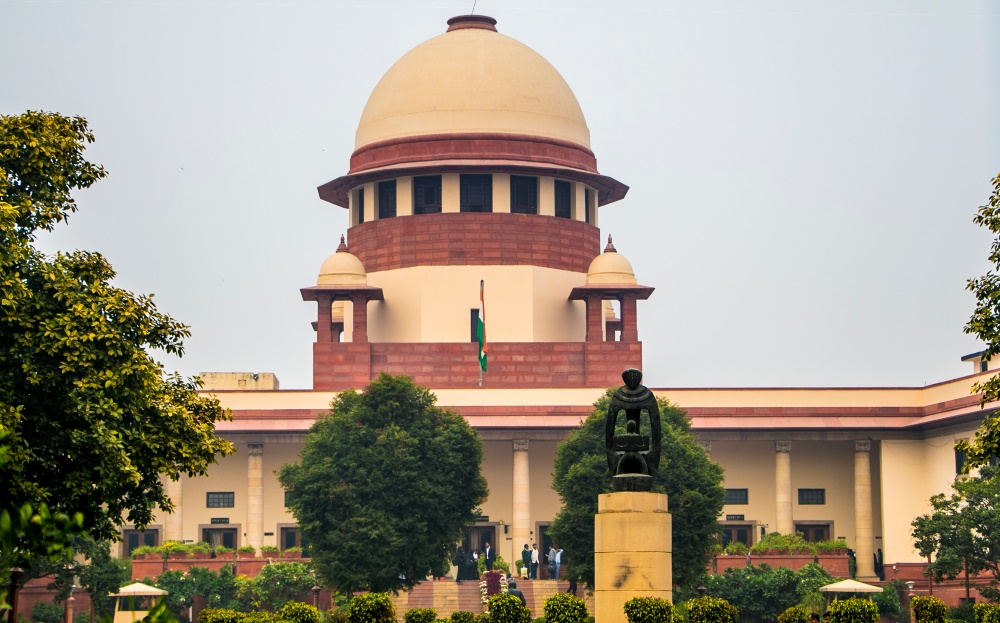
 The Supreme Court of India. (Photo: Wikimedia Commons)
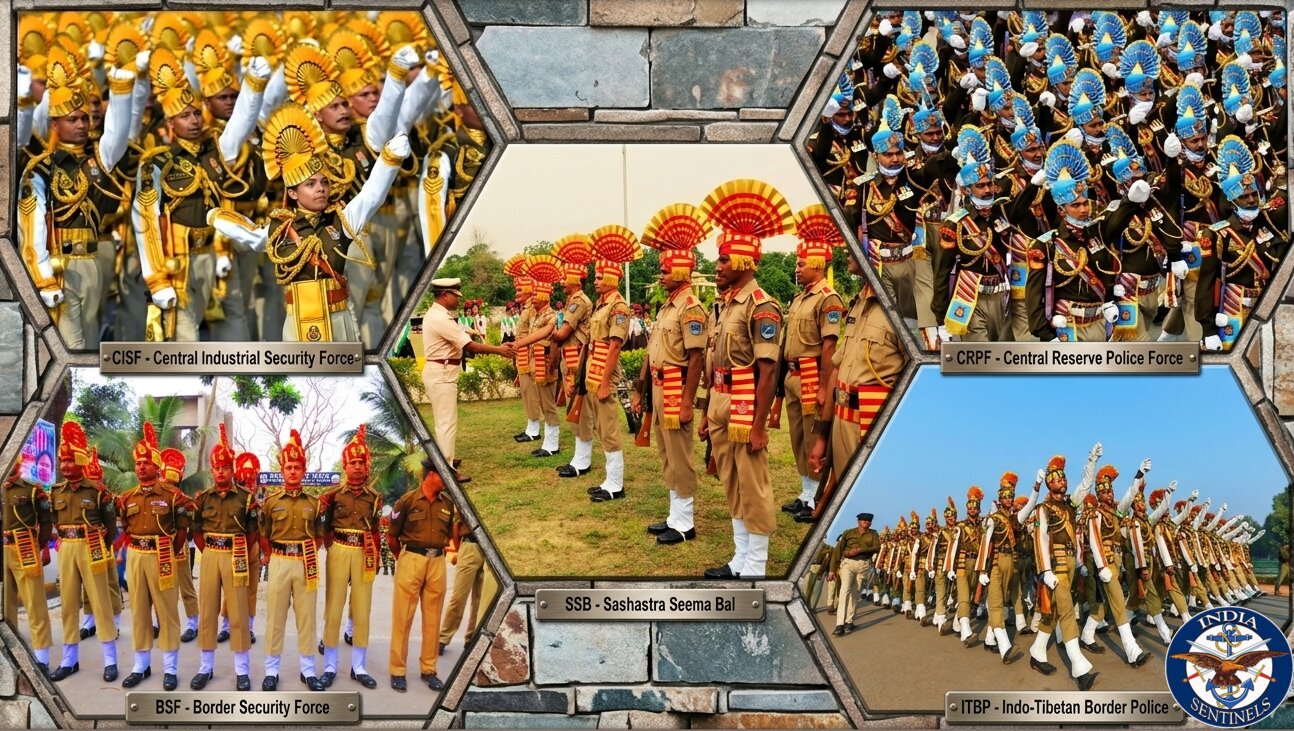
Officers of the central armed police forces (CAPFs) are trained and conditioned for combat, unlike Indian Police Service (IPS) officers, who are conditioned for civil law enforcement. Combat and logistics management are professional domains that belong to the armed forces, and CAPF cadre officers are an indispensable part of that combat fabric, rubbing shoulders with their men in the discharge of duty.
Little in the CAPFs’ operational record has been achieved without their leadership. They are the officers who ignite an aggressive combat mindset in those under their command, and hundreds of them have made the supreme sacrifice at the altar of national security. They are trained, capable and qualified to command CAPF units at every level, from company commander to director general.
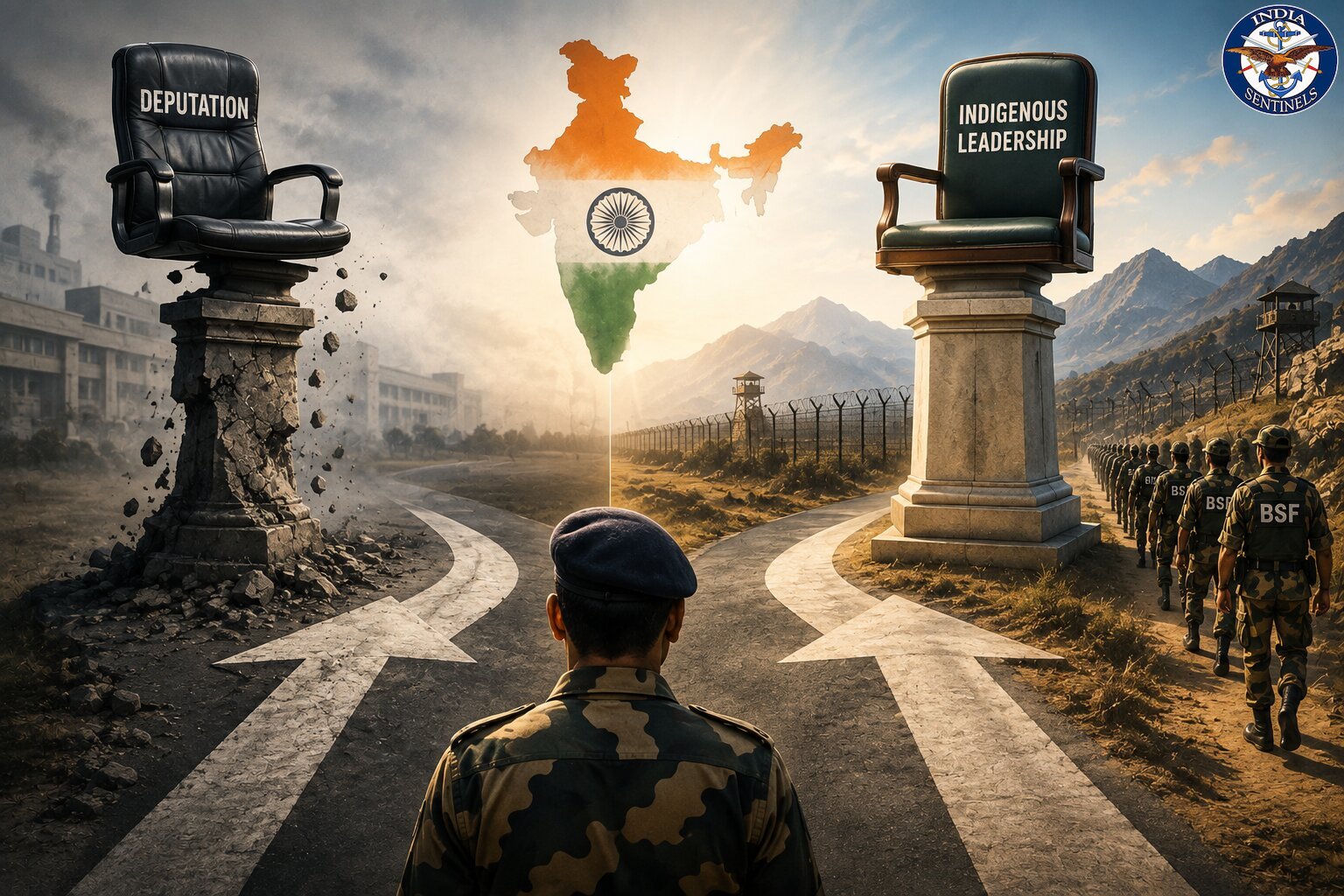
Yet they have been continuously denied timebound upward mobility and a say in decision-making, remaining trapped in a cycle of stagnation that burns them out by the time they reach command. When an IAS officer is considered fit to head the bureaucratic establishment, an IPS officer to head the state police, and an IRS officer to manage the financial and tax establishment, why should CAPF cadre officers, with a combined professional experience of more than 200 years, be denied time-bound promotion and the opportunity to head their own forces?
Read also: CAPFs need government empathy, not institutional apathy
Deputationists, Not Defenders
CAPF cadre officers are the sons of the soil, integral to the CAPFs’ traditions, culture and professional ethos. The steady command structure the forces enjoy today exists because of the relentless efforts of officers and men who have kept them combat-fit, even as they themselves have been forced to wither in a system that treats them as dispensable.
Deputationists, meanwhile, remain strangers to CAPF ethos, often unable to distinguish between strategy and tactics, or standoff and stand-on combat. They are never integrated into the field command model; they are parachuted in and placed above cadre officers chiefly because they have access to, and influence over, the levers of power.
The Ministry of Home Affairs, invoking its policy-making prerogative, has denied CAPF cadre officers the benefits of the organized “Group A” service (OGAS) status and non-functional financial upgradation (NFFU) – benefits that constitutional courts had already upheld and granted. What the courts granted after in-depth arguments has been snatched away in the name of policy prerogative.
This matters because CAPF cadre officers need to focus on strengthening national security in border guarding, warfighting and internal security, including insurgency, terrorism and the narcotics menace. They also need to focus on the welfare of their men and on effective grievance redressal to prevent the suicides and fratricides that are, unfortunately, on the rise. When command and government are instead sweating it out in court, combat readiness and administration both suffer, even if the damage is not always visible.
Read also: Who Should Lead CAPFs? A national security debate beyond cadre politics
A Widening Promotional Gap
Inflexible human resource policies have forced CAPF cadre officers to approach the constitutional courts for promotions they should have received as a matter of course. Commandants are presently stagnating after 29, 30 or 31 years of service, while their counterparts in the IPS from the equivalent 1995 batch have been elevated to special director general. Officers with 18 or 19 years of service are still deputy commandants, while their equivalents, or even juniors, are already deputy inspectors general. Such disparity affects morale and functional efficiency across the ranks, and the men serving under these officers are suffering the consequences of stagnation too.
Exasperated cadre officers went to the constitutional courts and won. On May 23, 2025, a Supreme Court bench of Justice Abhay S Oka and Justice Ujjal Bhuyan directed the government to implement OGAS and NFFU and to progressively reduce IPS deputation to CAPFs up to the level of inspector general, within two years. Rather than implement that judgment, the government pushed through the Central Armed Police Forces (General Administration) Act, 2026, which reserves 50% of inspector general posts, a minimum of 67% of additional director general posts, and all special director general and director general posts, for IPS officers on deputation.
Parliament passed the bill on April 2 this year, and it was notified on April 9 – coincidentally, the day the CRPF observes Shaurya Diwas in memory of the 1965 martyrs of Hot Springs. The act has now shifted the battle from the field to the courtroom, in the form of contempt petitions and a constitutional challenge, when the real battleground ought to be the border, where CAPF personnel fight anti-national elements every single day.
Read also: Illegal Immigration – India’s unfenced fault line on the eastern border
‘A Strong Lobby There’
Hearing the contempt petitions on September 2, a bench of Justice Bhuyan and Justice Atul Sharachchandra Chandurkar questioned the Union home ministry on the procedure followed for bringing IPS officers onto deputation in defiance of the court’s direction, and made clear that it would continue monitoring compliance with the May 2025 judgment. The Union home secretary, Govind Mohan, told the bench that the cadre-review proposals of all five CAPFs had moved through the required administrative process, while an affidavit filed on the government’s behalf disclosed that 46 IPS officers were currently on deputation to the forces.
Justice Bhuyan was unsparing in his oral observations to the additional solicitor general, Aishwarya Bhati: “Do you think there are no competent officers in the CAPFs to hold managerial positions? It is wrong, totally wrong. There are officers who have served for 25 to 30 years in the CRPF, ITBP and BSF, and yet they have not been given [promotion]. Why are you treating them like this? They are also defending our borders. They are fighting for us.”
When Bhati sought to characterize the dispute as an administrative matter rather than a CAPF-versus-IPS issue, the judge was blunt: “You have created it this way. I am sorry to use this word, but there is a strong lobby there. We do not want to express any view on that, but officers of cadres such as the CRPF, ITBP and BSF are completely stifled.”
Read also: Tadmetla Operation 2010 – Supreme sacrifice that demands answers
Case Should Never Have Reached Court
CAPF cadre officers were recruited, raised and trained within their own organizations’ primary security domains, yet they remain trapped in a cycle of stagnation that the 2026 act has now institutionalized rather than resolved. With the case alive before the Supreme Court, both in contempt and in a separate petition challenging the act’s constitutionality, a prolonged legal battle looms – one that serves neither the CAPFs’ interest nor the interest of national security. Court acrimony affects discipline and operational efficiency; it also erodes leadership morale at the lower and middle levels, an essential ingredient of successful combat.
This is not, at its heart, a battle for supremacy but for justice. The judges have given the government ample room to course-correct and implement the May 2025 judgment. The government would do well to ask whether IPS officers, commanding CAPFs from outside the cadre, genuinely know the difficult and hostile conditions their men and officers face in the field, and whether they possess the attributes of command and leadership that come only from experience.
The honest answer is no.
Read also: Op Sindoor – Testimony to BSF’s grit and fighting spirit
They have not slogged and sweated it out in the field with their men, and they remain, in real terms, detached from the CAPFs’ realities. Genuine man-management, the kind that keeps troops focused, satisfied and battle-ready, can only be exercised by those who have trained and served alongside them, rising step by step through genuine command experience.
The Supreme Court’s nudge, and its contempt proceedings, offer the government an honourable window to accept the judgment and implement it in full. A positive response would not only strengthen the constitutional mechanism; it would signal that the government respects the judiciary’s considered rulings and is serious about ending stagnation, restoring professionalism, and, ultimately, strengthening national security itself.
Disclaimer: The views expressed in the article are the author’s own and don’t necessarily reflect the views of India Sentinels.
Follow us on social media for quick updates, new photos, videos, and more.
X: https://x.com/indiasentinels
Facebook: https://facebook.com/indiasentinels
Instagram: https://instagram.com/indiasentinels
YouTube: https://youtube.com/indiasentinels
© India Sentinels 2026-27